

 Front-end
 Back-end
 Full Stack Developer
 Mobile
 Other


 Company
 Contact Us

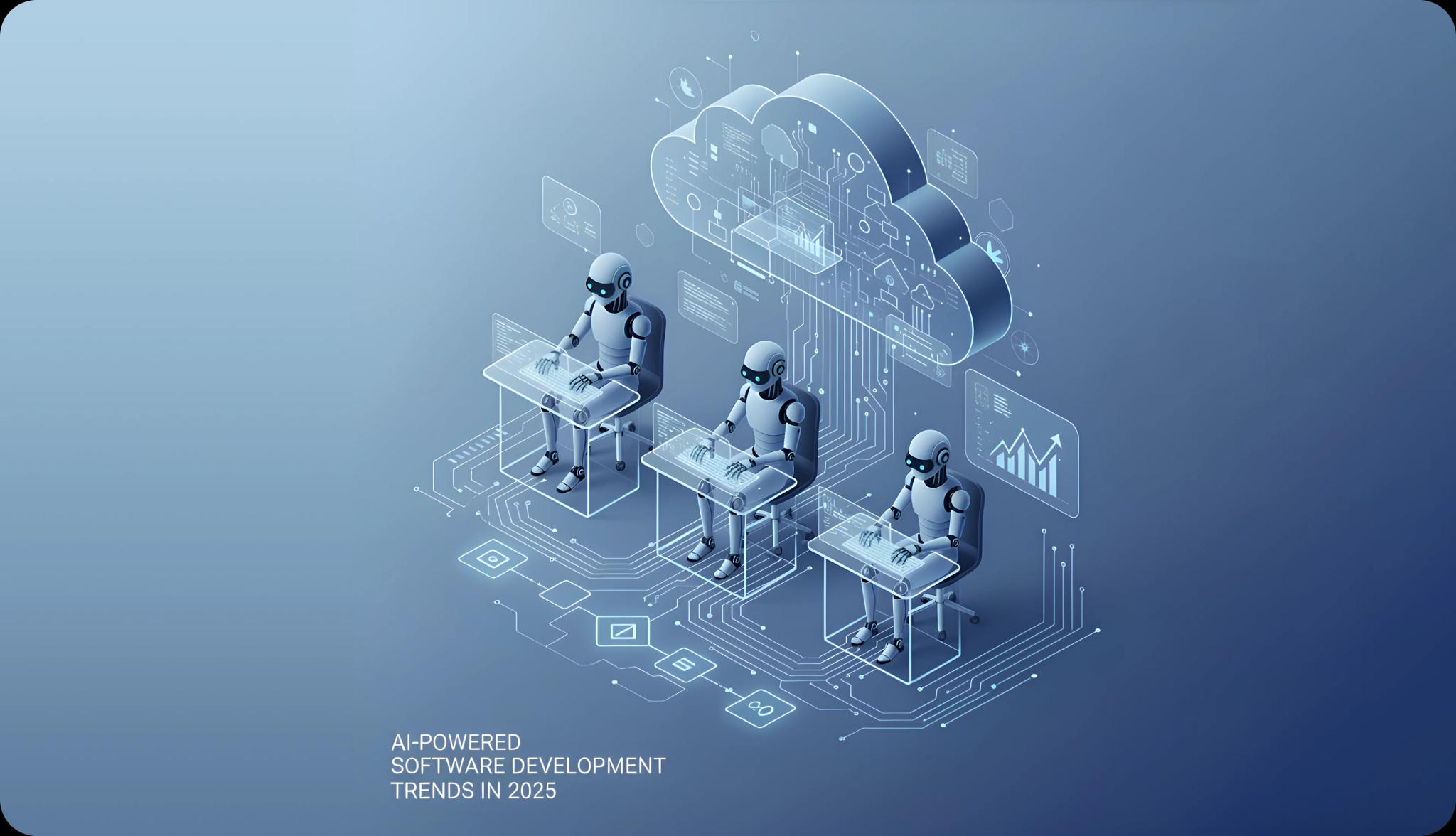
Software development in 2027 is shaped less by new tools than by what happens when the tools everyone already uses meet production systems, auditors and customers. AI writes a growing share of the code, agents are moving into real workflows, and the EU now sets security rules for software sold there. These are the six trends we expect product teams to plan around, with the data behind each.
The short answer
- AI coding is standard, and review is the bottleneck. 84% of developers use or plan to use AI tools, and 46% distrust their accuracy (Stack Overflow 2025).
- Agents reach production, and many get cancelled. Gartner expects more than 40% of agentic AI projects to be cancelled by the end of 2027.
- Testing AI becomes part of shipping. A product with an AI feature needs evaluations on its own data, not only public benchmarks.
- Security becomes a legal duty in the EU. The Cyber Resilience Act's main obligations apply from 11 December 2027.
- One codebase for every screen keeps winning for business apps.
- Web frameworks get more explicit, with opt-in caching in Next.js 16 and the end of Create React App.
1. AI-assisted coding is standard, and review is the bottleneck

In the Stack Overflow 2025 survey, 84% of respondents used or planned to use AI tools in development, up from 76% a year earlier, and 50.6% of professional developers used them every day. Google's DORA 2025 research put AI adoption at 90% among software professionals, with more than 80% saying it made them more productive.
Trust has not kept up. 46% of Stack Overflow respondents distrust the accuracy of AI output, against 33% who trust it, and only 24% of DORA respondents trust AI "a great deal" or "a lot". DORA's central finding is that AI works as an amplifier: it makes strong teams faster and exposes weak processes.
What it means for 2027: writing code is no longer the slow step. Reviewing it, testing it and owning it is. Plan for a senior review of every change, tests that run on every merge, and a named person accountable for code an assistant wrote. If a product was built fast with AI tools and now breaks, see our guide to vibe coding cleanup.
2. AI agents move into production, and many get cancelled
Agents that take actions, not only answer questions, are moving from demos into real workflows. Gartner predicts that 33% of enterprise software applications will include agentic AI by 2028, up from less than 1% in 2024 (Reuters, June 2025).
The same research expects more than 40% of agentic AI projects to be cancelled by the end of 2027, because of escalating costs and unclear business value. Gartner also warns about "agent washing": it estimates that only about 130 of the thousands of vendors selling agentic AI offer the real thing.
Developers share the caution. In the Stack Overflow survey, 14.1% used AI agents at work every day, and 87% were concerned about their accuracy.
What it means for 2027: start an agent where a mistake is easy to catch and the value is easy to measure, such as triage or data entry with a person approving each action. Our AI agent development and AI implementation teams work this way.
3. Testing AI becomes part of shipping
Public benchmarks compare models. They do not tell you how a model will do on your data or your users' questions. As more products ship AI features, evaluation moves into the release process: a fixed set of real tasks, an automatic check, and a pass mark before anything goes live.
For how the best-known coding benchmarks work and what they miss, see coding benchmarks explained. For evaluation as a service, see our LLM evaluation services.
What it means for 2027: plan evaluation time alongside development time for every AI feature customers see, and rerun the evaluations whenever the model or the prompt changes.
4. Security becomes a legal duty for software sold in the EU

The EU Cyber Resilience Act covers software and hardware products "with digital elements", including apps. It entered into force on 10 December 2024. Its reporting obligations apply from 11 September 2026, and its main obligations from 11 December 2027.
What it means for 2027: if you sell software in the EU, plan for secure defaults, a process for handling vulnerabilities, security updates, and a record of the components in your product (a software bill of materials) before December 2027. Building these into the normal release process is far easier than adding them in a rush.
5. One codebase for every screen

Separate iOS, Android and web apps are still the slow, expensive path for most business products. Flutter and FlutterFlow ship one codebase to both app stores and the web.
The stores keep moving too. From 31 August 2026, new apps and updates on Google Play must target Android 16 (API level 36), so every app needs at least one maintenance release a year.
6. Web frameworks get more explicit
The React team deprecated Create React App for new apps in February 2025 and now recommends starting with a framework such as Next.js or React Router. Next.js 16, released in October 2025, made Turbopack the default bundler and turned caching into an explicit, opt-in choice.
What it means for 2027: for teams on older versions, 2027 is a good year to upgrade on purpose rather than under pressure. Our Next.js developers handle these upgrades as planned work.
How to plan for 2027
- List where AI already touches your code or your product, and who reviews each place.
- Pick one agent use case with a clear owner, a measure of success and a stop date.
- Write evaluations for any AI feature customers see.
- Map your products against the Cyber Resilience Act timeline if you sell in the EU.
- Schedule framework and app store updates as planned work, not emergencies.
If you need capacity for any of this, our custom software development team works as remote dedicated developers inside your repository and your sprint.
Frequently asked questions
What is the biggest software development trend for 2027?
AI-assisted development at scale. Most developers already use AI tools, so the change in 2027 is in how teams review, test and own AI-written code, and in moving AI agents from pilots into production.
Will AI agents replace developers in 2027?
No. Agents automate parts of the work, but people still decide what to build, review what ships and own the result. Gartner expects more than 40% of agentic AI projects to be cancelled by the end of 2027.
What does the EU Cyber Resilience Act mean for software companies?
Software sold in the EU has to meet security requirements across its life: secure design, vulnerability handling and security updates. Reporting obligations apply from 11 September 2026 and the main obligations from 11 December 2027.
Is low-code still a trend in 2027?
Yes, for the right work. Visual builders such as FlutterFlow and workflow tools such as n8n speed up standard apps and automations. Custom code is still needed for complex logic, integrations and scale.
How should a company prepare for 2027?
Review where AI is used, run one agent pilot with a stop date, add evaluations to AI features, check the Cyber Resilience Act dates if you sell in the EU, and plan framework and store updates ahead of their deadlines.
Sources
- Stack Overflow Developer Survey 2025: AI
- Google: How are developers using AI? Inside our 2025 DORA report
- Reuters: Over 40% of agentic AI projects will be scrapped by 2027, Gartner says
- European Commission: Cyber Resilience Act
- Android Developers: target API level requirements
- React: Sunsetting Create React App
- Next.js 16 release