



 Front-end
 Back-end
 Full Stack Developer
 Mobile
 Other
Other


 Company
 Contact Us
The potential of telemedicine and mHealth apps was brought to the fore with the COVID-19 pandemic bringing about rapid changes in the global healthcare delivery system.
Rock Health Researchers, in one of its reports, mentioned a whopping $5.7 billion billion being raised by US digital health startups in the first half of 2024. It is without a doubt that telemedicine apps are gradually changing the traditional healthcare delivery system.
What is a Telemedicine App?
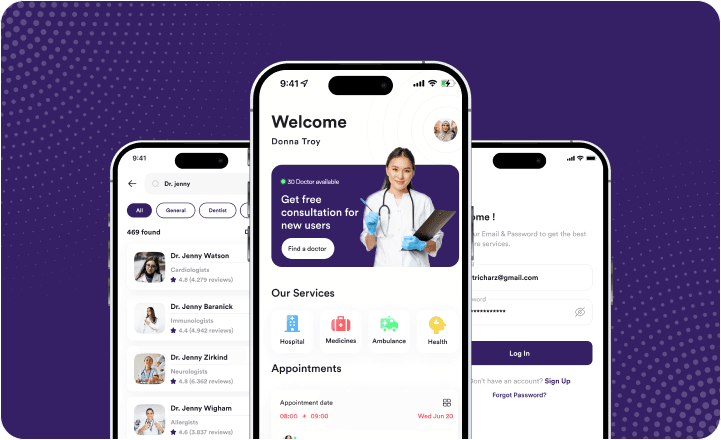
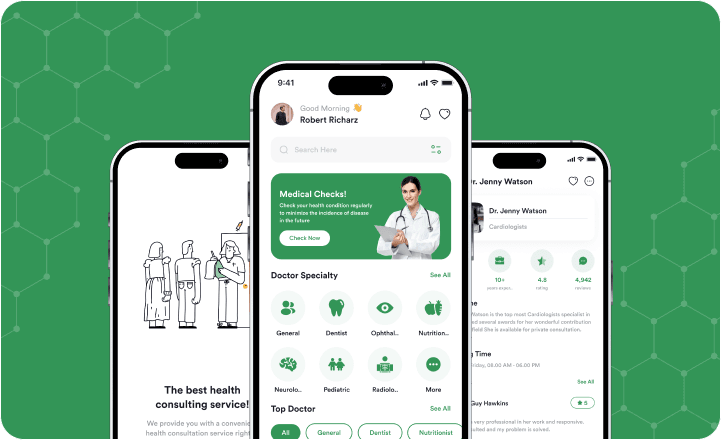
A telemedicine mobile app is a healthcare mobile app that checks your health status and shares it with your doctor from the comfort of your home. These apps make it easier to query for medical advice, get prescriptions, or even schedule tests.
Telemedicine apps aim to make regular healthcare more accessible, especially for people who might struggle to see a doctor in person.
Whether it’s chatting with a doctor, managing a chronic condition, or getting mental health support, telemedicine apps bring the best healthcare benefits for you.
Why Should You Develop a Telemedicine App?
A telemedicine app is helpful for both patients and healthcare professionals.
For patients, it reduces the pain of traveling and waiting for appointments. Patients can engage with doctors from anywhere with cheaper fees than in-person visits.
For healthcare providers, it’s a way to manage their time better, focusing on urgent cases while handling minor issues remotely.
Market Research and Competitor Analysis
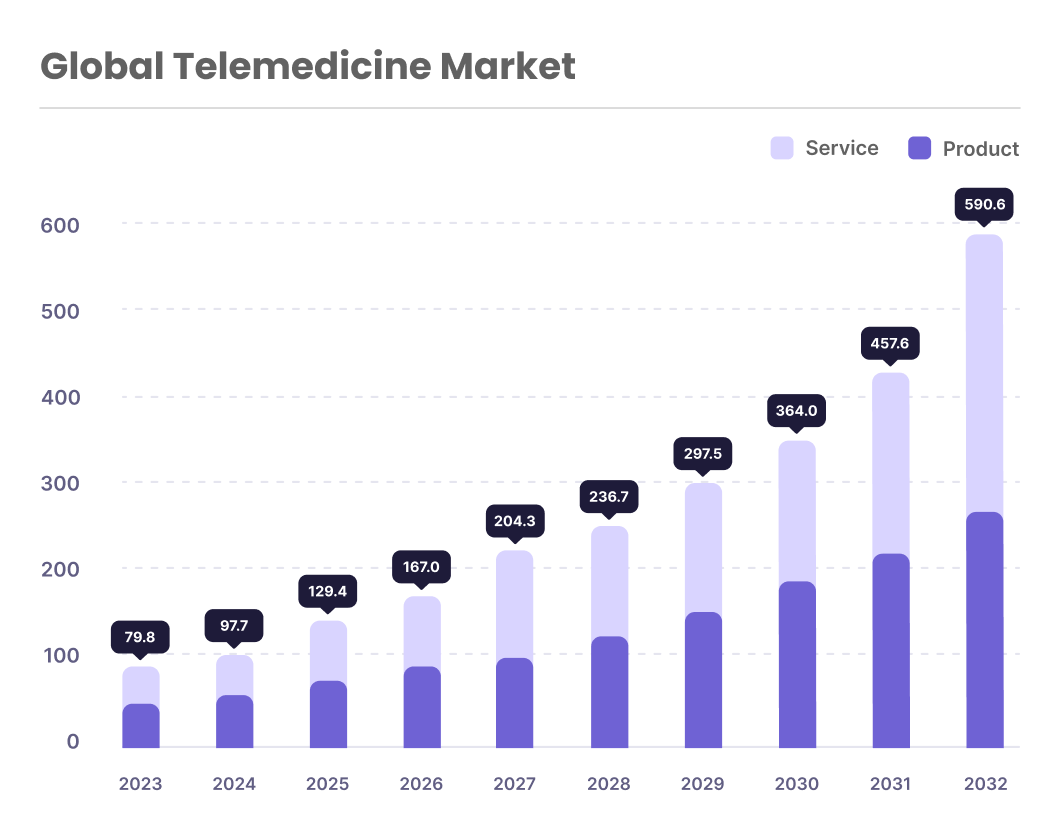
As per the Market.us Media report, the global telemedicine market, which held a revenue of USD 63.5 billion in 2022, is projected to reach approximately USD 590.9 billion by 2032, growing at a CAGR of 25.7% during this forecast period.
In 2023, telemedicine apps accounted for the highest revenue in North America, worth about 70.9 billion USD.
Some existing apps are doing great in the telemedicine sector like Teladoc, Amwell, PlushCare, Spruce, Telehealth, Lemonaid Health App, Zocdoc, etc. You can consider them as a competitor this will help you do competitors' analysis.
So, by developing a telemedicine app, you’re not just following a trend - you’re part of a movement that’s making healthcare easier, faster, and more accessible for everyone.
Trends and Challenges in Telemedicine Apps
Trends
-
More People Using It: More patients and doctors are using telemedicine, especially after the pandemic.
-
Connecting with Wearables: Telemedicine apps are starting to work with devices like fitness trackers, helping monitor health in real-time.
-
Use of AI: Artificial intelligence is being used to help with diagnosing issues and suggesting treatments.
-
Better User Experience: Developers are making apps easier to use, so patients find them simple and enjoyable.
-
Changing Rules: New regulations are making it easier for telemedicine services to be accepted and reimbursed.
-
Focus on Security: There’s a strong focus on protecting patient information to keep it safe from hackers.
Challenges
-
Following Rules: Understanding and following different healthcare rules can be complicated for telemedicine providers.
-
Privacy Concerns: Keeping patient data secure is a big challenge, especially with rising cyber threats.
-
Payment Problems: Different rules about payments can make it hard for telemedicine services to stay financially stable.
-
Language barriers: It might create difficulties in expressing symptoms accurately, thus compromising health.
Types of Telemedicine Apps
-
Real-Time Consultation Apps
Allow patients and doctors to consult live via video or audio programs. These apps are great for detecting and treating common health problems.
-
Remote Patient Monitoring Apps
Utilizing connected gadgets, healthcare providers can monitor health vitals in real-time. These apps are essential for controlling chronic conditions and providing post-operative care.
-
Store-and-Forward Apps
This kind of app mostly gathers and analyzes images such as laboratory scans or other test results for patient diagnoses. Prescription Management Apps
Allow patients to request, renew, and receive prescriptions digitally. These apps can also send medication notifications and monitor prescription history.
-
Telepsychiatry Apps
Focus on mental health by providing therapy sessions, counseling, and assistance for disorders such as anxiety, depression, and PTSD via secure video or chat consultations.
Telemedicine App Must-have Features for Doctors
-
Patient Dashboard
A centralized view of all patients, their appointments, medical history, and treatment plans.
-
Virtual Consultation Room
A secure environment for conducting video and audio consultations with patients.
-
E-Prescribing
The ability to prescribe medications electronically and send them directly to the patient's pharmacy.
-
Medical Records Management
A system for storing, organizing, and accessing patient medical records.
-
Messaging
A secure messaging platform to communicate with patients, answer questions, and provide follow-up care.
-
Appointment Scheduling
A calendar for managing appointments, including scheduling, rescheduling, and canceling.
Billing and Insurance
Tools for managing billing and insurance claims.
Telemedicine App Must-have Features for Patients
-
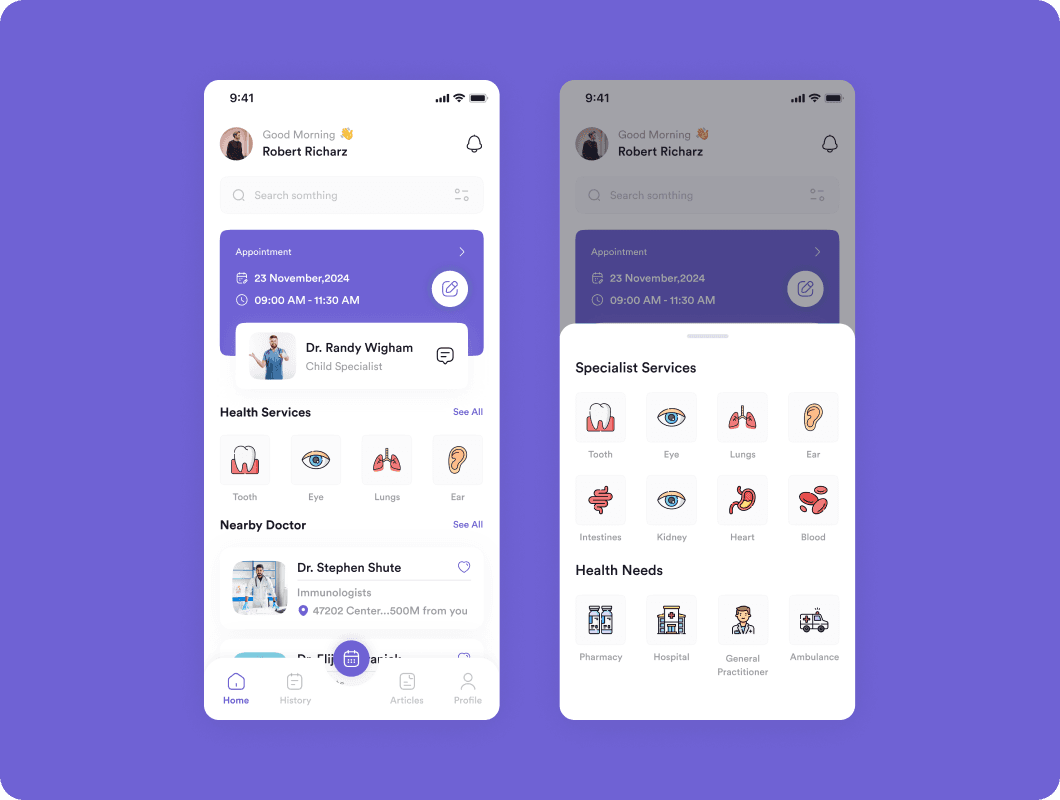
Patient Portal
A secure online platform for accessing personal health information, scheduling appointments, communicating with doctors, and viewing medical records.
-
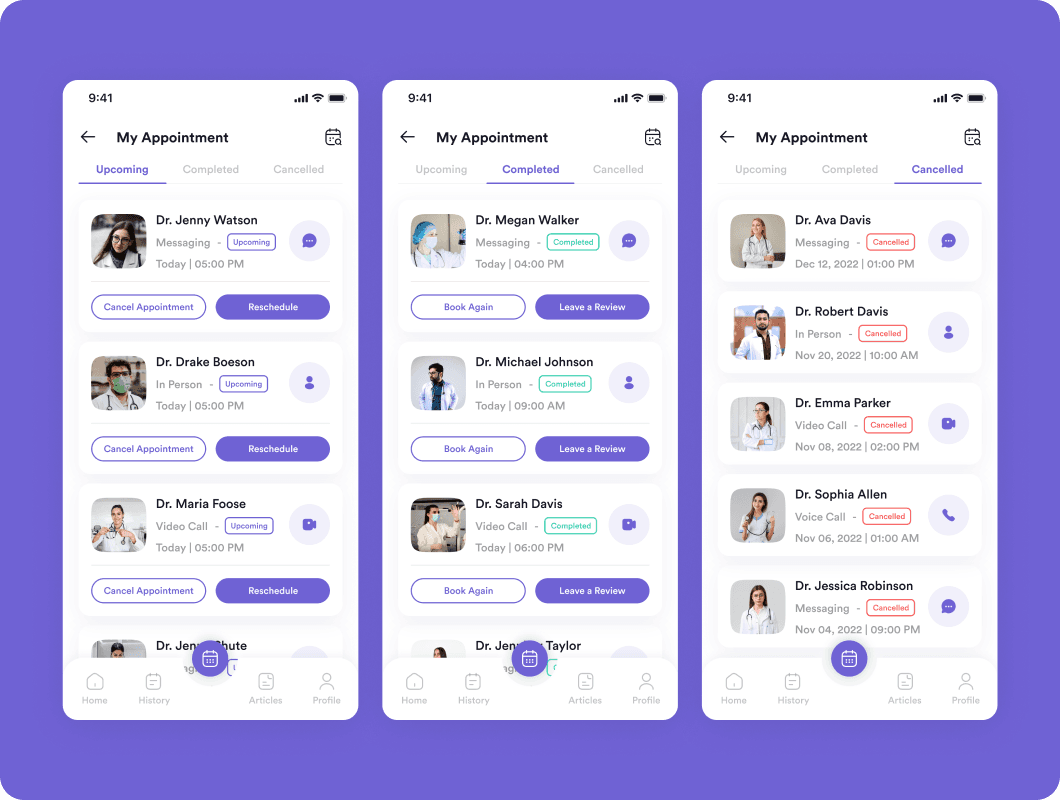
Appointment Scheduling
A convenient way to book appointments with their preferred doctors at desired times.
-
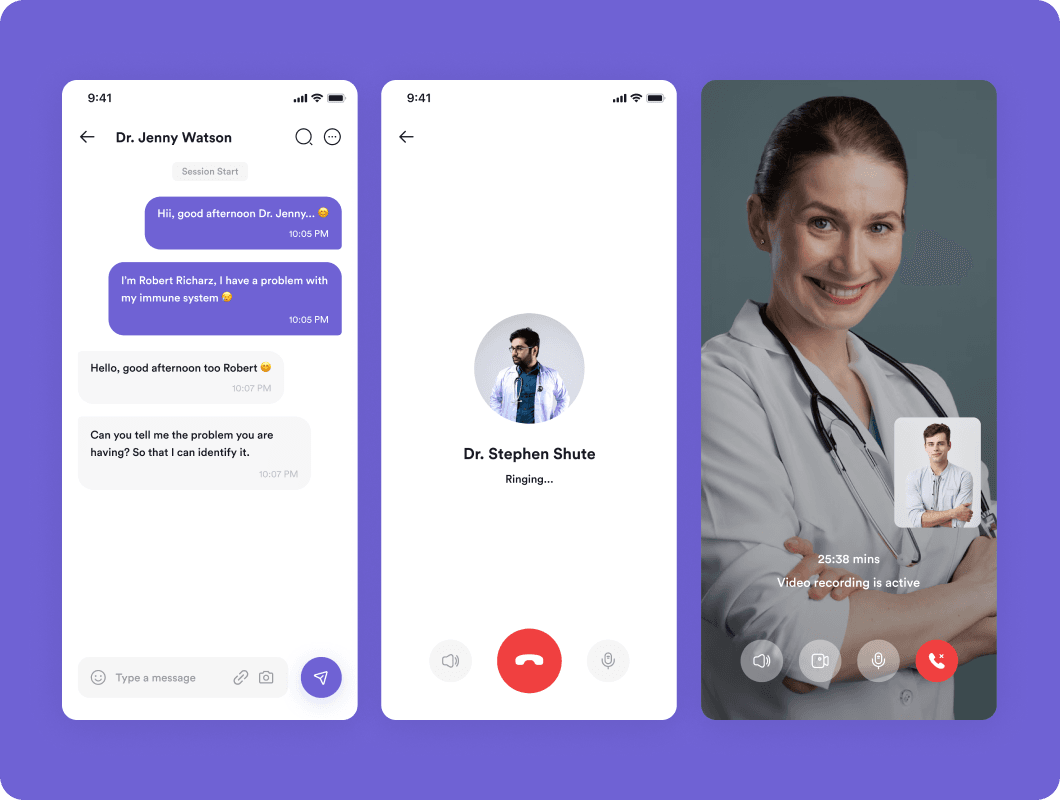
Virtual Consultations
The ability to consult with doctors via video or audio calls.
-
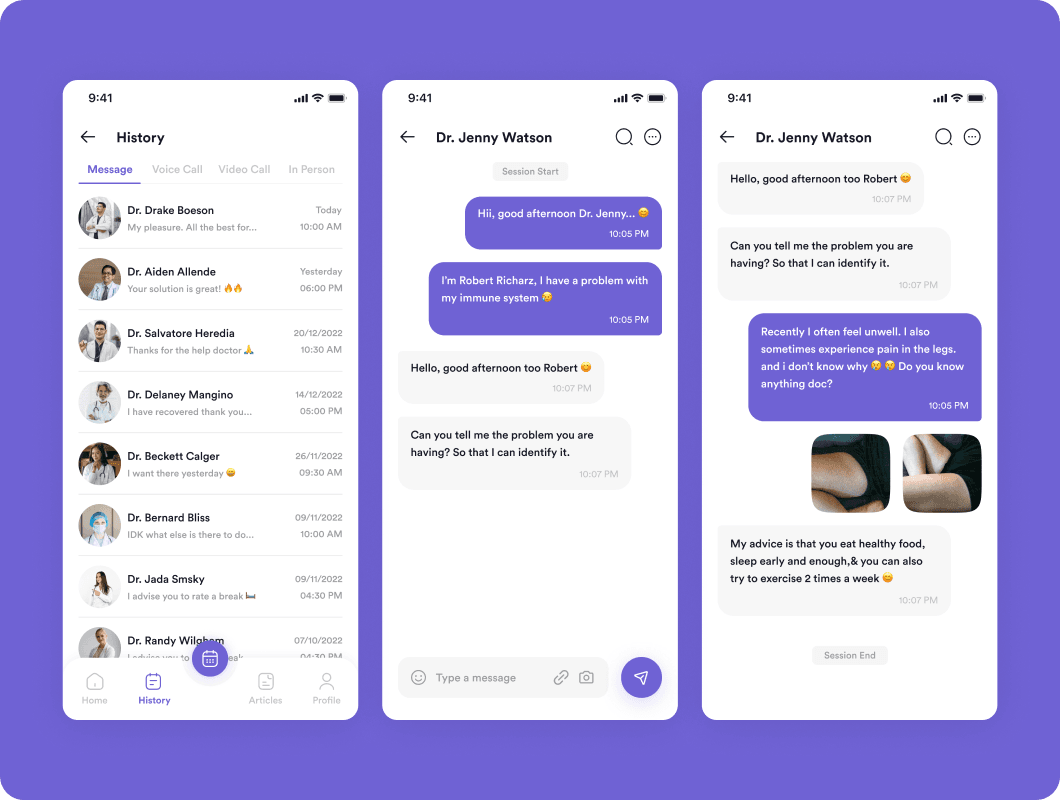
Messaging
A secure messaging system to communicate with their doctors, ask questions, and receive updates.
-
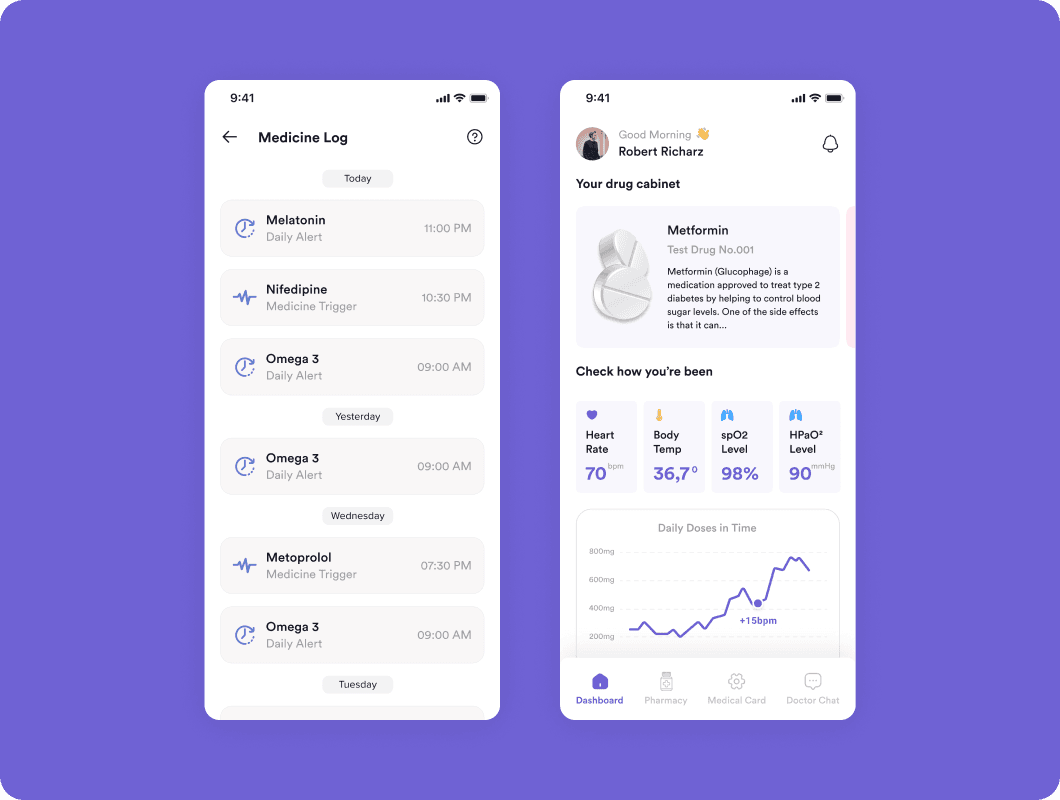
E-Prescriptions
Access to electronic prescriptions that can be filled at a pharmacy.
-
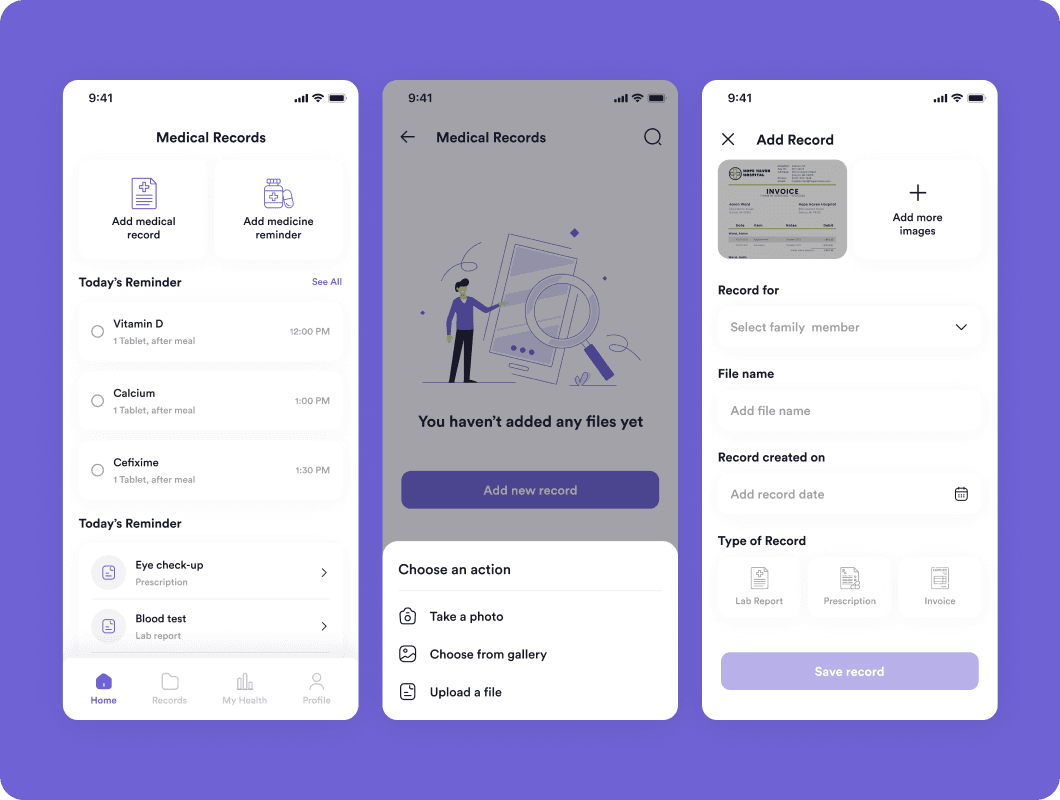
Medical Records
The ability to view and download their medical records.
-
Health Reminders
Reminders for appointments, medication, and follow-up care.
-
Health Library
Access to educational resources and information on various health topics.
-
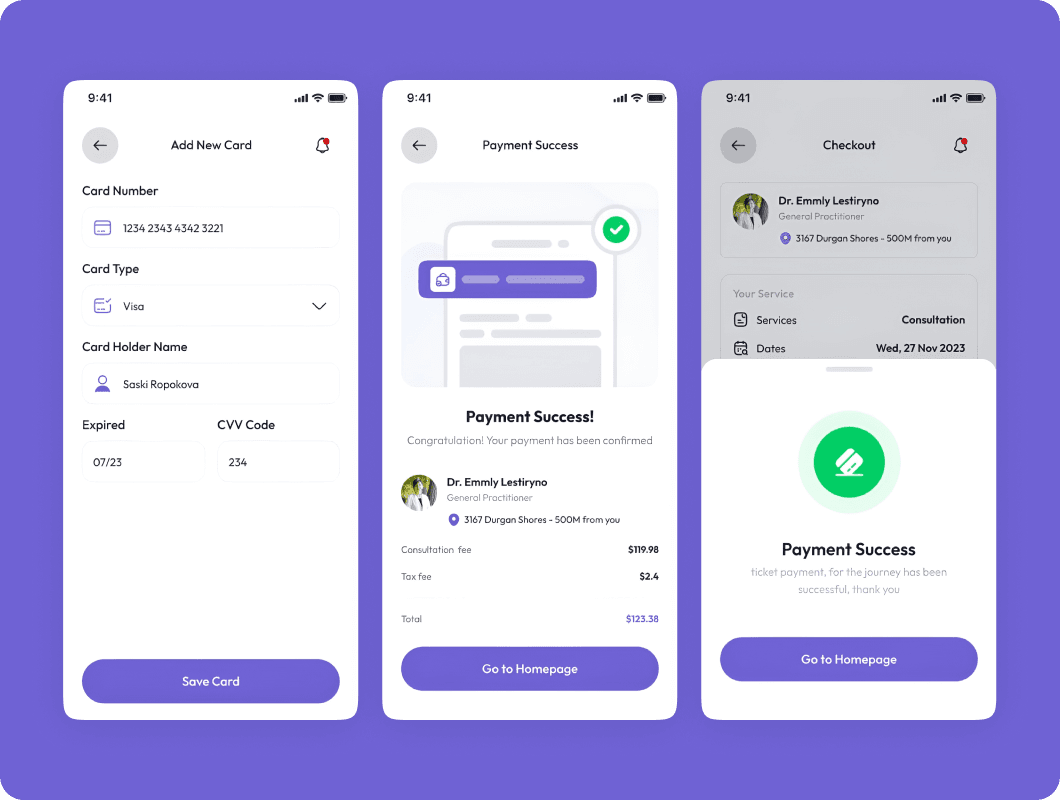
Payment Integration
A secure way to pay for consultations and other medical expenses.
Popular Integrations in Telemedicine App
Artificial Intelligence (AI)
- Chatbots: Use AI to answer questions and schedule appointments.
- Treatment Recommendations: AI can suggest personalized treatments based on patient data.
- Personal Assistance: AI can help patients with tasks like finding doctors or scheduling appointments.
- Improved Diagnoses: AI can help doctors make more accurate diagnoses by analyzing patient data.
Internet of Things (IoT)
- Wearable Devices: Use devices like smartwatches to track patient's health.
- Smart Drug Dispensers: Automatically dispense medication as needed.
- Remote Monitoring: Track patient's health from a distance using medical devices.
Cloud Storage
- Data Management: Store patient data securely in the cloud.
- Scalability: Easily handle large amounts of patient data.
Blockchain
- Secure Data Sharing: Share patient data securely using blockchain technology.
Big Data
- Data Analysis: Use big data to analyze patient data and improve care.
Telemedicine App Development Process
The telemedicine app development process is divided into Project Analysis and Project Development.
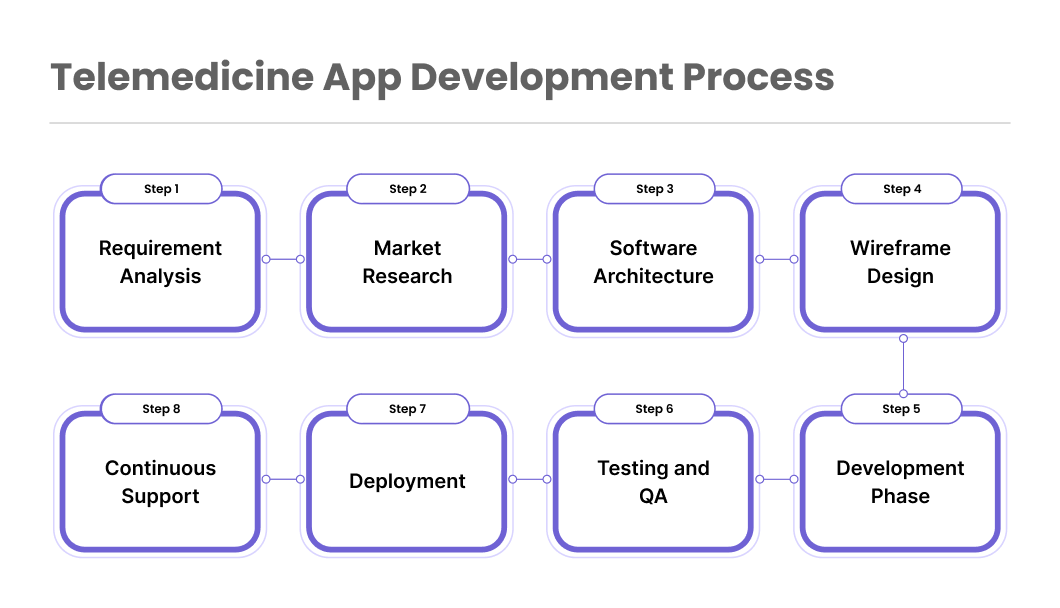
Project Analysis:
- Requirement Analysis: Begin by understanding the market, identifying the app’s purpose, and target users, and defining core features. You must choose the appropriate telemedicine application development technology stack to ensure its safety and performance.
- Market Research: Thorough research to analyze the competition between telemedicine app development companies and user expectations.
- Software Architecture: Then comes designing software architecture based on your end-user goals to ensure scalability.
- Wireframe Design: Ensure a user-friendly wireframe showcasing the app's interface, navigation, and user experience.
Project Development:
- Development Phase: Developers use the latest telemedicine tech stack to create the app by adding necessary features.
- Testing and Quality Assurance: The QA team thoroughly tests the app to detect and rectify any issues, assuring a high-quality and secure telemedicine app development.
- Deployment: After thorough testing, the app is deployed on the desired platform, and ready for use.
- Continuous Support: offer ongoing assistance to resolve any telemedicine app development challenges and ensure smooth operation post-launch.
What is the Telemedicine App Development Cost?
Telemedicine App Development cost is between $50k to $70k. However, several aspects come to the surface while determining the cost of developing a telemedicine app. Such as its complexity, functionalities (like video calls with doctors, appointment scheduling, or a safe information handling system), graphical user interface, etc.
Telemedicine App Development Monetization Models
-
Pay-per-consultation
The most widespread model is pay-per-consultation, where patients are charged concerning the type of consultation, specialist, or duration. This is common in telemedicine software development because it directly links revenues to the number of users.
-
Subscription model
A subscription model that pays monthly or annually for unlimited consultations or premium features guarantees stable revenues in telemedicine apps.
The SAAS Model provides telemedicine apps as a subscription service for healthcare organizations, generating revenue.
-
Franchising Model
Another option is Franchising. Your telemedicine application can be used by healthcare providers in different areas, leading to another source of income.
Telemedicine App Development with Empiric Infotech LLP
Empiric Infotech LLP, a telemedicine app development company, believes that meeting the essential needs of users is key to standing out in the market.
So, we recommend beginning with the discovery phase & then Conducting thorough research with experienced telemedicine app developers. We are here to give your approach a compelling value that differentiates you from the competition.
Contact our team to get the best telemedicine app development services.
Ready to develop your telemedicine app? Connect with our expert today to get personalized advice and a detailed project estimation.
FAQs
What are the important features of a telemedicine app?
Important features of a telemedicine app are Video consultations, appointment scheduling, prescription management, and secure messaging.
What is the cost of developing a telemedicine app?
Telemedicine app development costs range from $50k to $70k for a basic app on a single platform.
How to monetize a telemedicine app?
There are many methods to monetize your telemedicine app including Pay-per-consultation, subscription models, and advertising.