




 Front-end
 Back-end
 Full Stack Developer
 Mobile
 Other


 Company
 Contact Us

Materials Image Analysis for Testing Laboratories
A desktop app that tracks asphalt specimens on camera, syncs load data and generates lab-ready Excel reports.
platform
Desktop Application
team
1 Member
location
United Kingdom
industries
Materials Testing
Project Background
Project Background
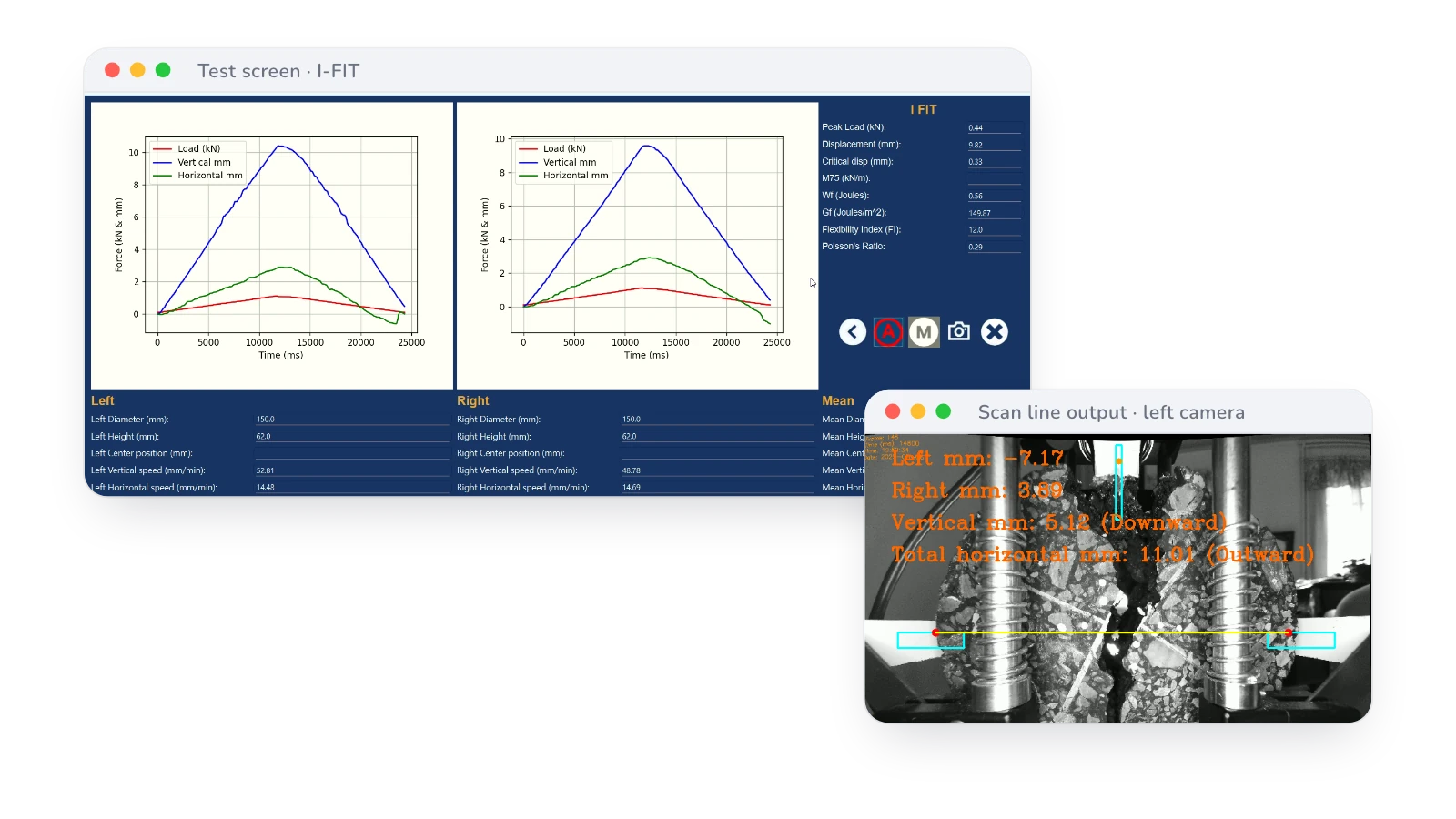
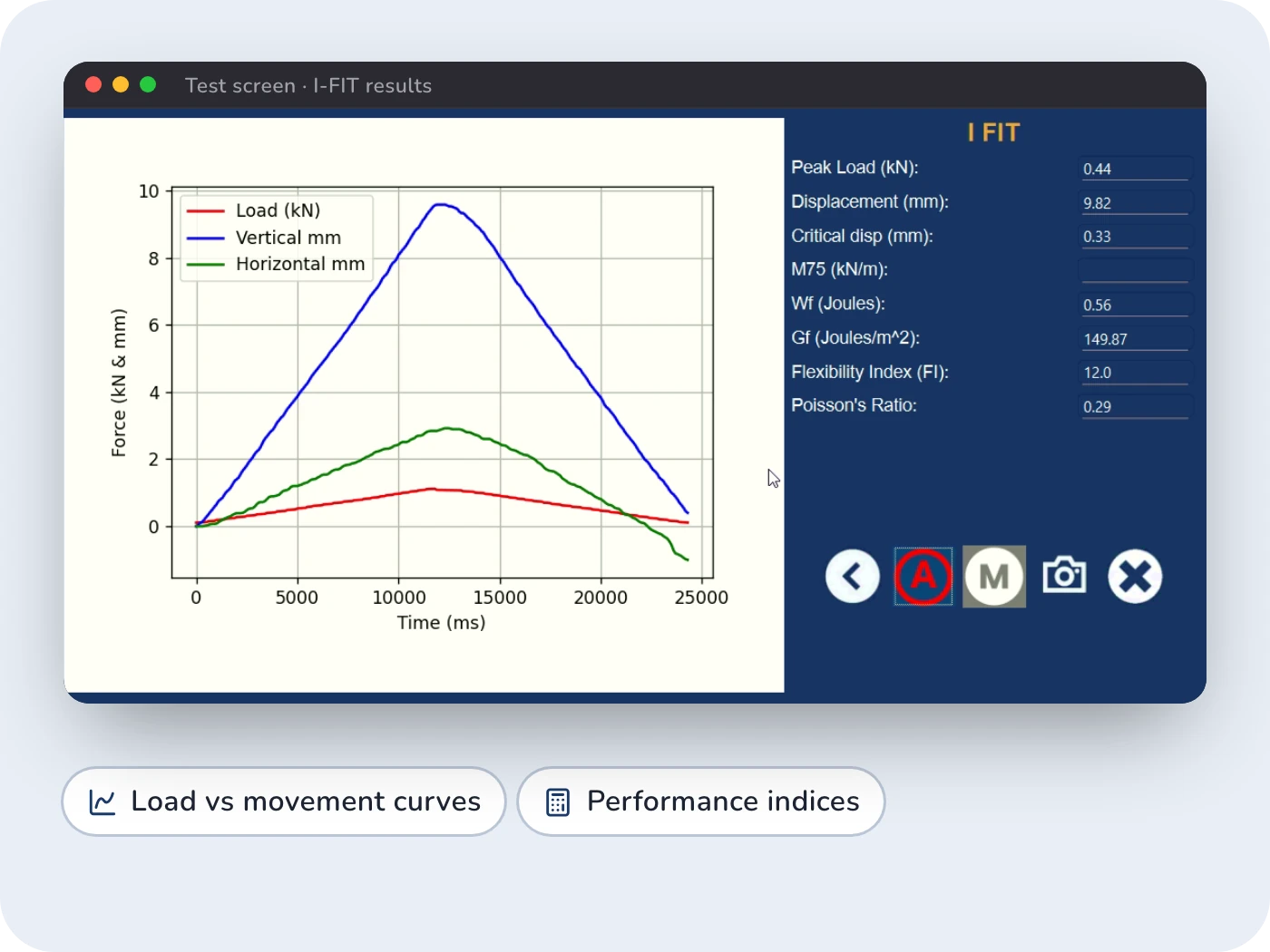
Materials Image Analysis is a Python desktop application for materials testing laboratories. It measures the strength and durability of disk-shaped specimens, mainly asphalt mixtures, and supports the IDEAL CTg, I-FIT, High Temperature IDT and IDEAL RT test methods.
The software combines live camera footage with load machine readings to track specimen movement, analyse load and movement behaviour, calculate performance indicators and produce spreadsheet reports. Laboratories get a repeatable testing workflow for quality assurance, material comparison and mix design.
Business Needs
Business Needs
The client needed a reliable desktop tool that standardises testing and removes the inconsistencies of manual measurements and separate data processing. Camera measurements and machine force readings had to be synchronised precisely to calculate strength, energy and crack tolerance. Key requirements:
- Several recognised test methods in one application
- 100 mm and 150 mm specimen diameters
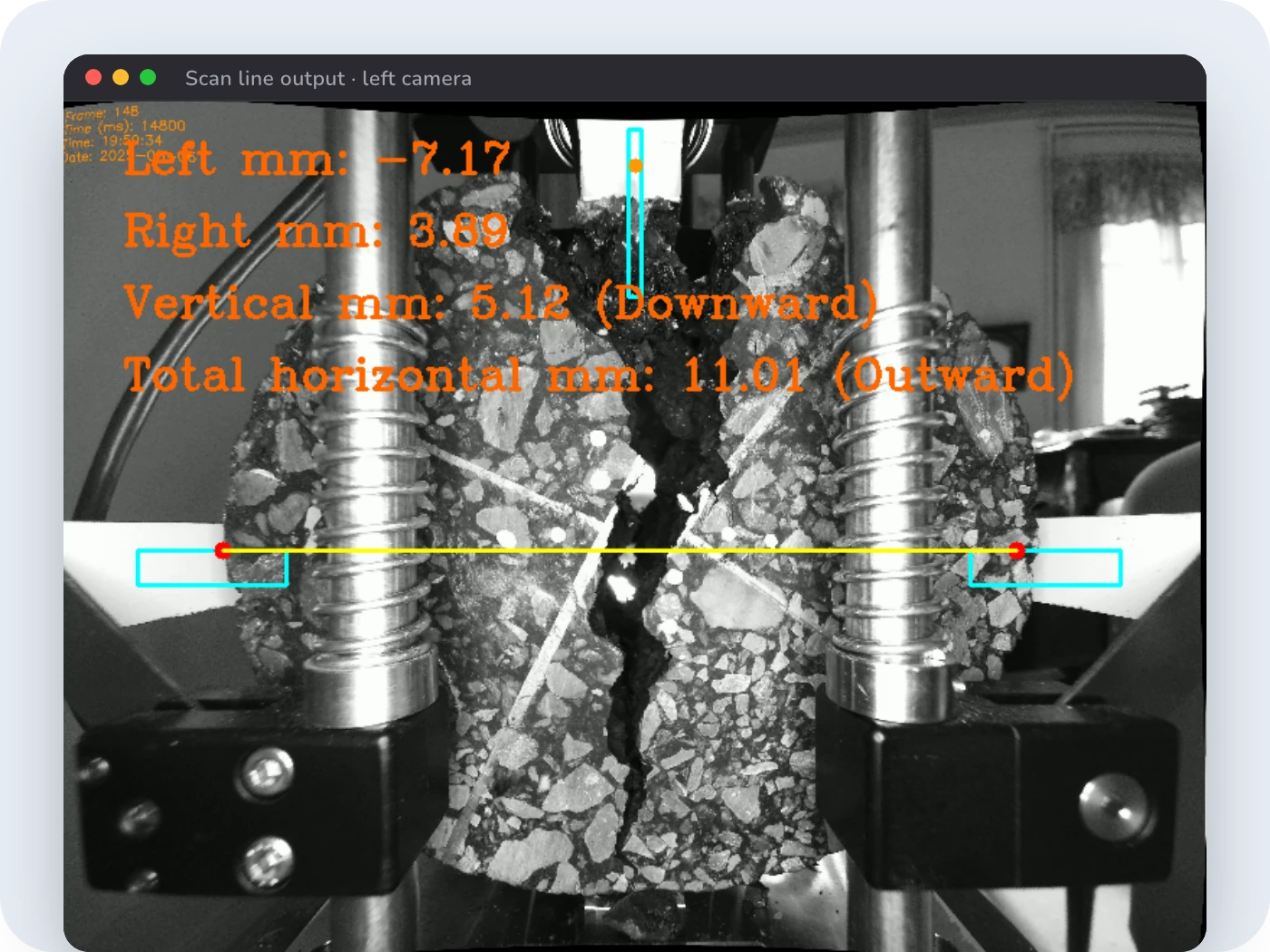
- Displacement measured from camera footage with millimetre calibration
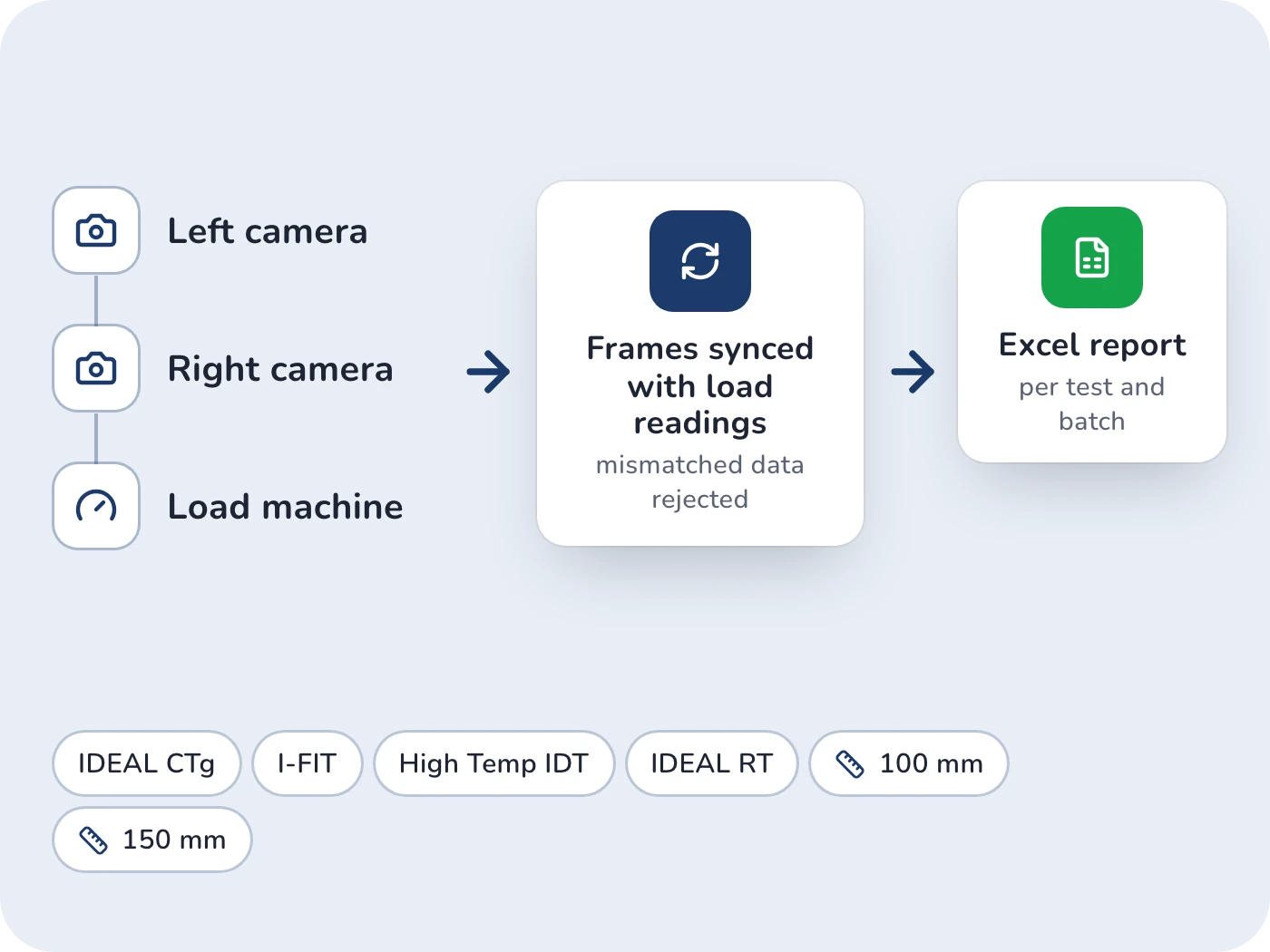
- Video frames synchronised with load machine readings
- Automated calculations and spreadsheet reports
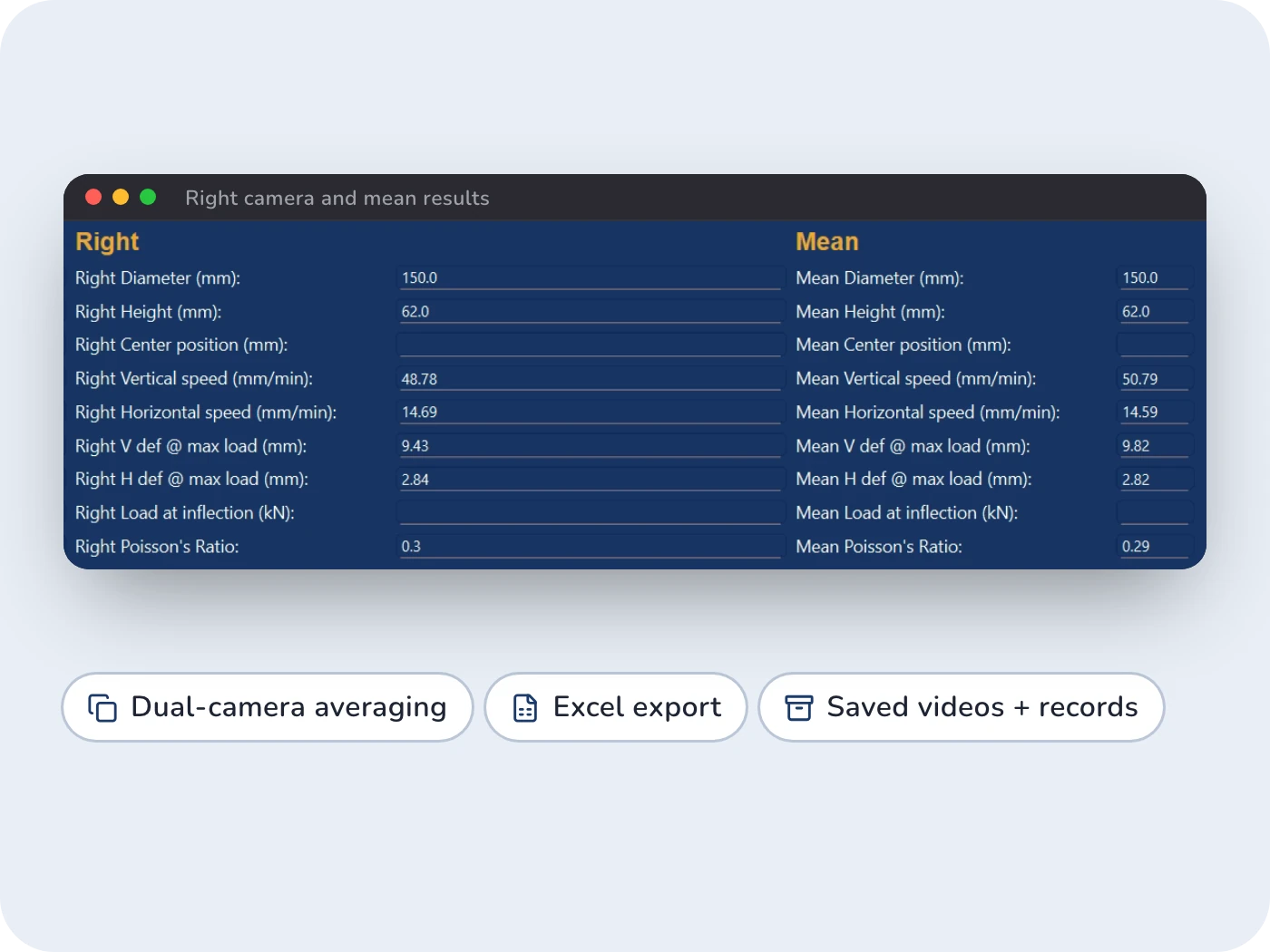
- Dual-camera measurement with averaged results
- Calibration tools, guided setup and saved test records
- Configurable builds for different laboratory equipment
- Local operation on lab workstations, with no cloud dependency during tests
Tech stacks

Python
For Backend

PyQt
For Frontend

OpenCV
For AI / ML

NumPy
For Backend

SciPy
For Backend

pandas
For Backend

FFmpeg
For Backend
Service Provided
Project Challenges
- Video and load synchronisation: Every video frame has to match its load reading. A timing mismatch would give wrong displacement, energy and strength results, so the app checks alignment before calculating.
- Calibration and accuracy: Lens distortion, lighting, focus and image quality affect edge detection, so calibration and image processing had to be reliable and repeatable.
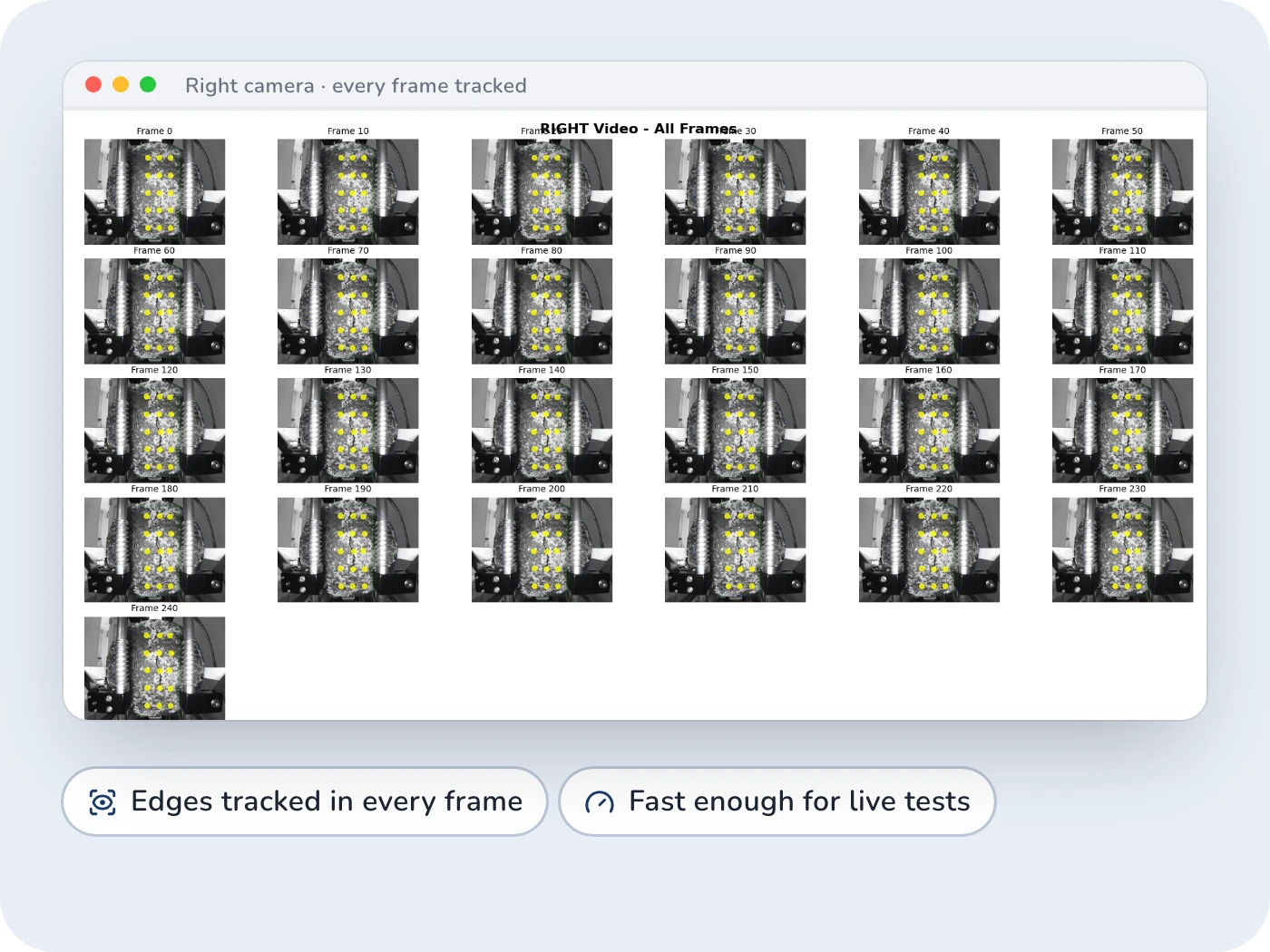
- Real-time video processing: Fast tests need efficient frame processing so measurements stay continuous.
- Several test methods and specimen sizes: Four test families and two geometries add variations in configuration, forms, layouts and calculations.
- Dual-camera measurement: Left and right camera results are processed the same way and combined when both are valid.
- Workstation deployment: Camera drivers, calibration data, configuration files and output paths must work in development and in packaged lab installations.
- Scientific reporting: Load and displacement data has to become material performance indicators and structured reports for lab records.
Strategy and Solutions
- IDEAL CTg, I-FIT, High Temperature IDT and IDEAL RT workflows for each specimen size
- Guided setup forms for specimen dimensions, mix details and test parameters, with saved defaults
- Left and right camera support with device checks
- Live video with frame-by-frame edge and movement tracking in OpenCV
- Calibration tools for millimetres per pixel, alignment, focus and lens distortion
- Automated displacement tracking, with optical flow where needed
- Load and video synchronisation that rejects mismatched data
- Automated calculations for peak load, absorbed energy, work of failure, post-peak slope and a crack tolerance index, in line with ASTM D8225 and NCAT practice
- Dual-camera result averaging
- Excel reports with measurements, indicators and summaries
- Saved videos and records, with offline analysis of past tests
- Licence acceptance, device registration and login protection
- Separate builds for 100 mm, 150 mm, combined and overlay testing labs
Results & Impact
- Video displacement tracking and load measurements combined in one desktop application
- More consistent measurements through calibration, image processing and synchronisation checks
- Standard performance reports for material comparison, mix design and quality assurance
- Less operator variation through guided workflows, saved defaults and dual-camera averaging
- Faster lab work with live monitoring, automated processing and offline review
- Product variants for different specimen sizes, load machines and test workflows
- Traceable digital records: videos, measurement tables and spreadsheet reports
Other Works
Explore some of the best solutions that we created to offer a best-in-class user experience.
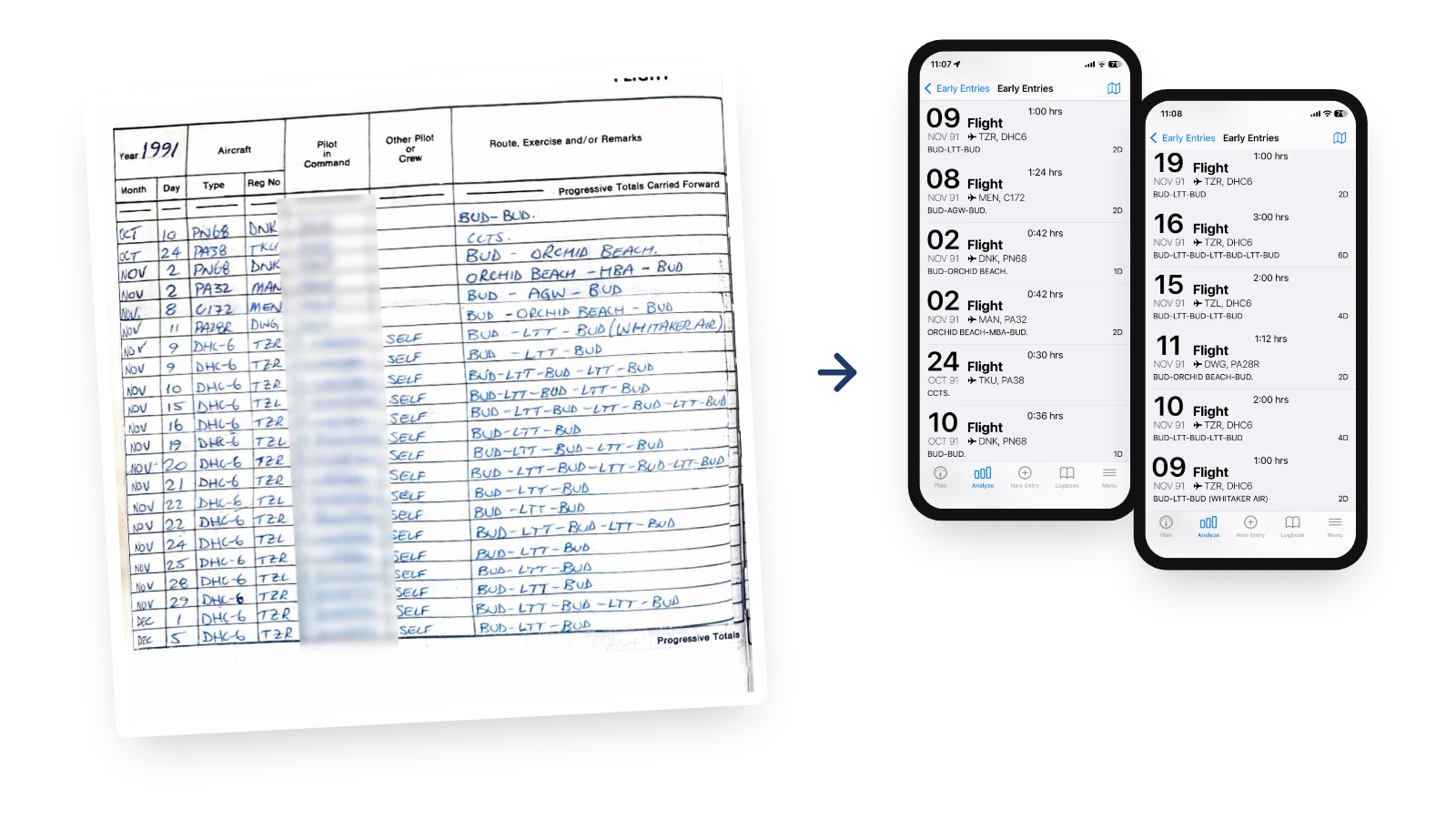
LogTen Pilot Logbook PDF to CSV Conversion
Handwritten and scanned flight logbooks converted into reviewed CSV files, ready for a pilot's LogTen import.
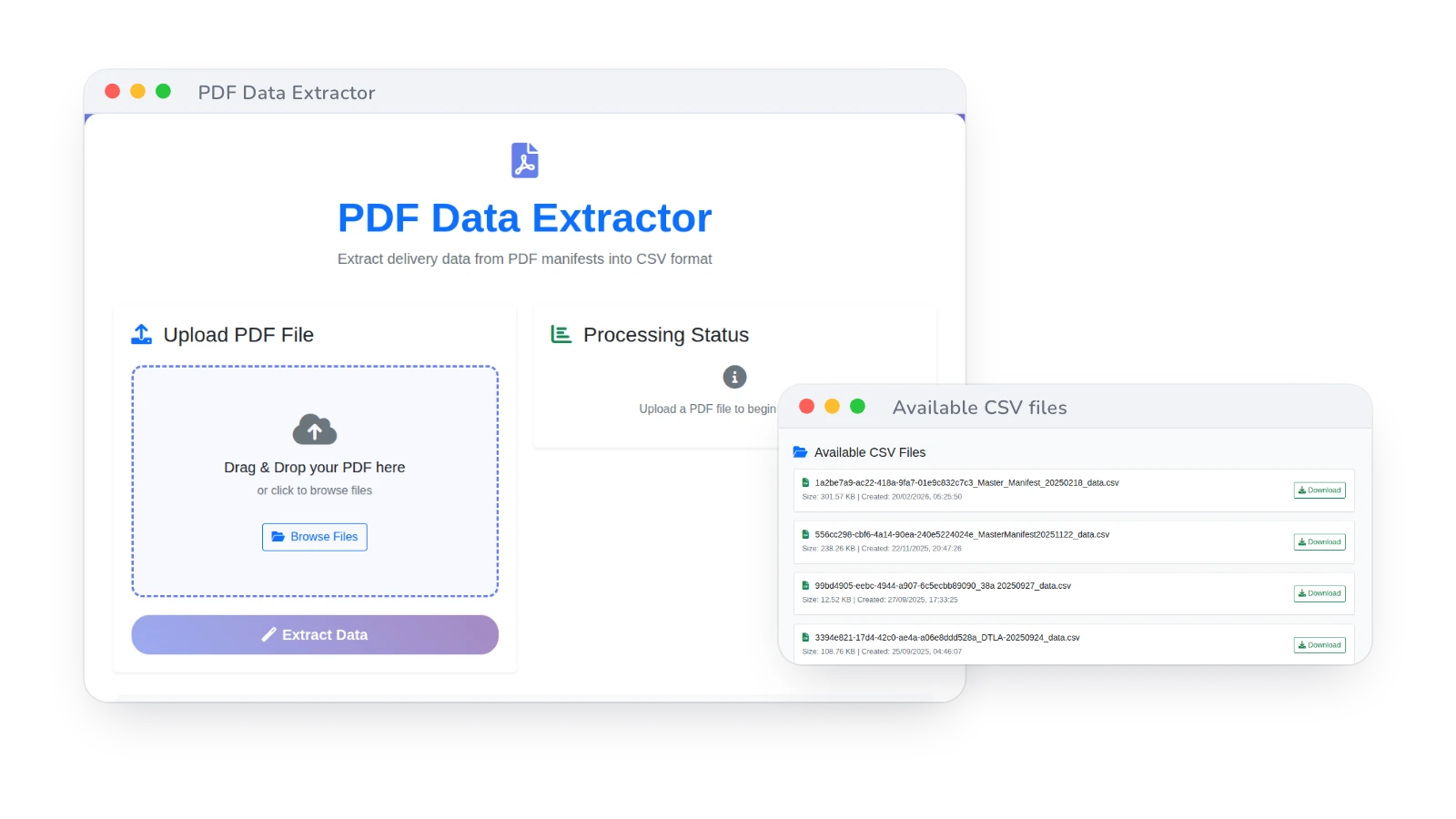
Delivery Receipt Extraction Platform
An AI document pipeline that turns bulk delivery receipt PDFs into clean, validated CSV files for a logistics app.
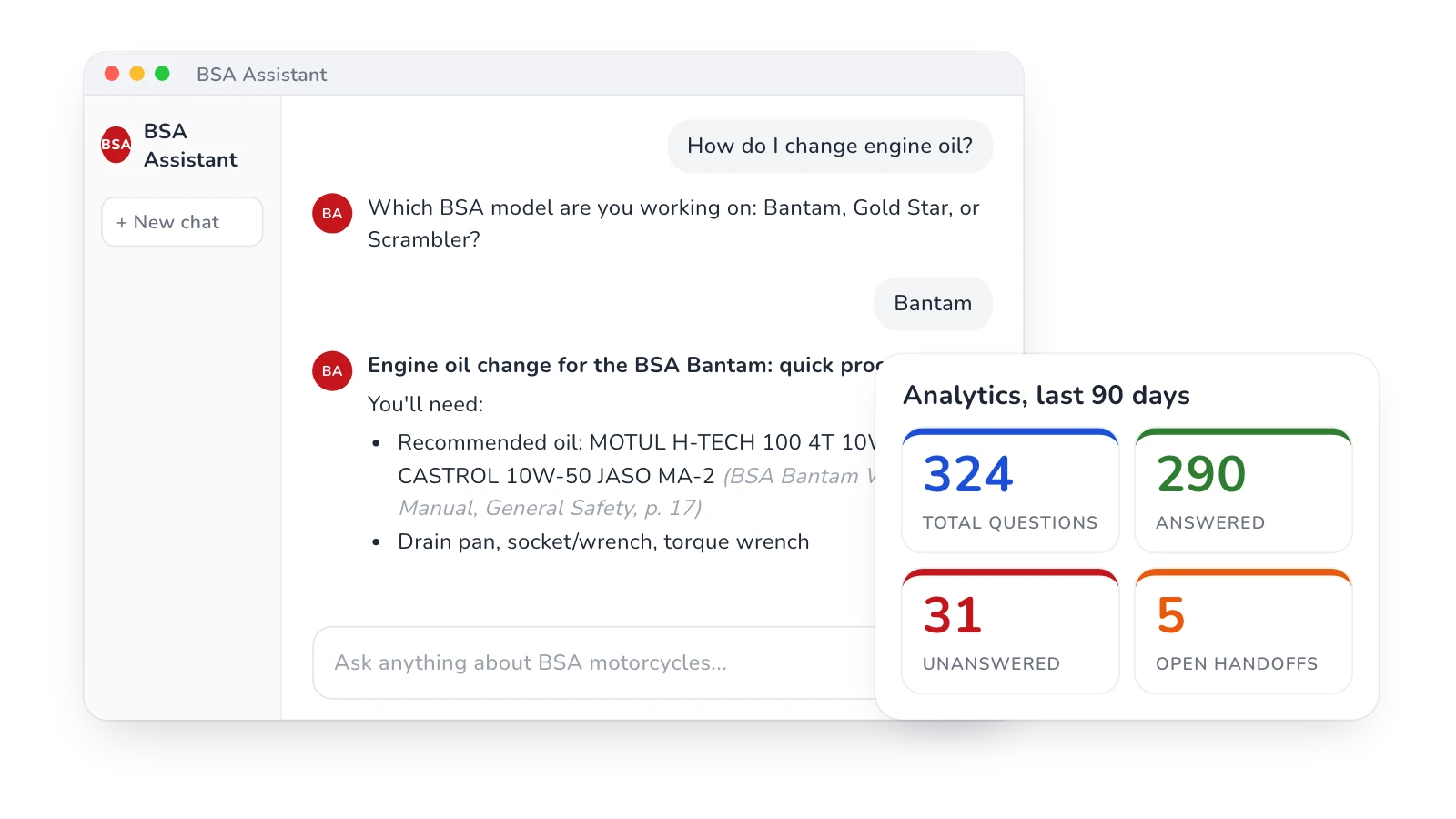
BSA Chatbot: AI Motorcycle Support Platform
An AI support chatbot that answers BSA motorcycle questions from official manuals, with source references and human handoff.


