



 Front-end
 Back-end
 Full Stack Developer
 Mobile
 Other
Other


 Company
 Contact Us
![Roles of Web and Mobile App Developers [Complete Guide]](/_next/image?url=%2Fapi%2Fimage%2Fapp%2Fmedia%2Fblog%2F1735549950884_Roles%20of%20Web%20and%20Mobile%20App%20Developers.png&w=2048&q=75)
Web and mobile app developers are responsible for creating the websites and applications we use on a daily basis. These developers design and build everything from e-commerce sites to social media apps, ensuring they are functional, user-friendly, and visually appealing. While both web and mobile app development share similar goals, the skills and tools used can differ.
In this article, we will discuss the roles and responsibilities of web and mobile app developers, their required key skills, challenges, and the future of web and mobile app development.
Overview of Web and Mobile App Development
Web Development
Web Development refers to the creation of websites and web applications that run in browsers. Web developers build the structure, design, and functionality of websites, ensuring they work properly on different devices.
The global web development market was worth $65.35 billion in 2023 and is expected to grow to $130.9 billion by 2032, with an annual growth rate of 8.03%.
.png)
Mobile App Development
Mobile App Development involves creating applications for smartphones and tablets. Mobile app developers write code for apps that run on platforms like iOS (Apple devices) and Android (Google devices).
According to Statista, the global mobile app market is projected to reach $756 billion by 2027, with a steady Compound Annual Growth Rate (CAGR) of 8.58% from 2022 to 2027.
.png)
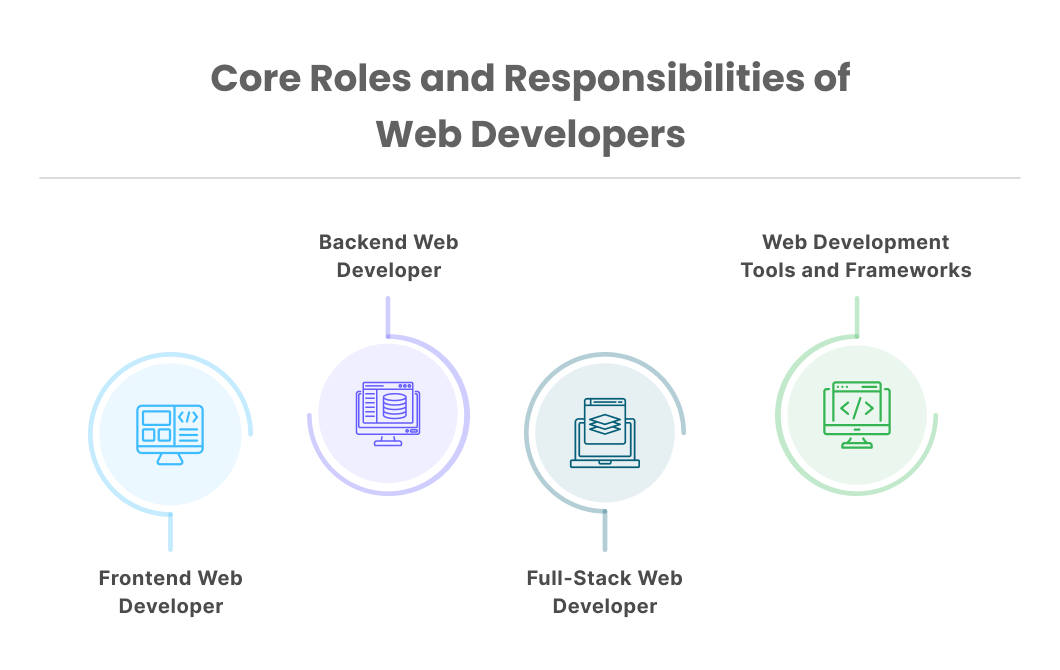
Core Roles and Responsibilities of Web Developers
Frontend Web Developer
Frontend developers focus on the parts of a website that users see and interact with. They use languages like HTML, CSS, and JavaScript to design the layout, style, and interactive elements of a site. Their job is to ensure the website looks good and works well on various screen sizes, including phones, tablets, and desktops.
Backend Web Developer
Backend developers handle the "behind-the-scenes" part of a website. They build the server-side logic that makes web applications work, using languages like Python, PHP, Java, or Node.js. They are responsible for managing databases, ensuring that data is securely stored and retrieved, and making sure everything runs smoothly on the server.
Full-Stack Web Developer
Full-stack developers are skilled in both frontend and backend development. They build both the parts of a website that users interact with and the server-side logic that makes the site function. They use a wide range of technologies and tools to ensure the entire web application works together seamlessly.
Web Development Tools and Frameworks
Web developers often use frameworks and libraries to make their work easier. Popular frontend frameworks include React, Angular, and Vue.js. For backend development, developers may use Node.js, Django, or Ruby on Rails. Developers also use version control systems like Git to track changes and collaborate on projects.
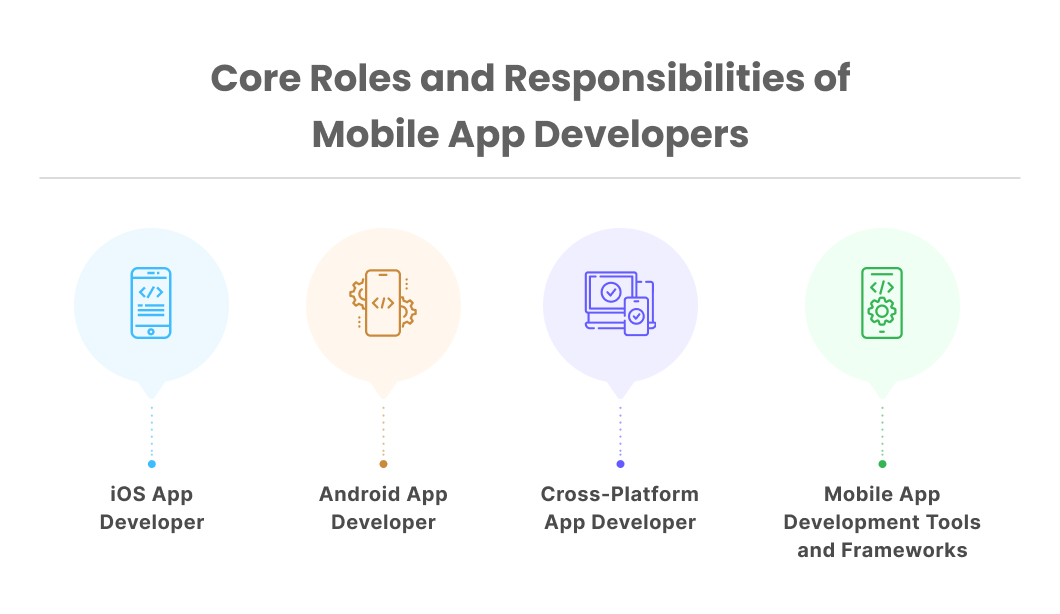
Core Roles and Responsibilities of Mobile App Developers
iOS App Developer
iOS developers create apps for Apple devices, such as the iPhone and iPad. They primarily use Swift or Objective-C to write apps and follow Apple’s guidelines for design and functionality. They focus on optimizing apps for the unique features and design standards of iOS devices and publish apps on the App Store.
Android App Developer
Android developers create apps for Android devices, such as phones and tablets from various manufacturers. They usually work with Java or Kotlin programming languages to build apps. They follow Google’s Material Design principles and ensure their apps work well on a variety of devices, screen sizes, and Android versions, publishing them on the Google Play Store.
Cross-Platform App Developer
Cross-platform developers write apps that can run on both iOS and Android. They use frameworks like Flutter, React Native, or Xamarin, which allow them to write a single codebase that works on multiple platforms. This approach saves time and effort, as developers don’t need to write separate code for each platform.
Mobile App Development Tools and Frameworks
Mobile developers use tools like Xcode for iOS development and Android Studio for Android apps. They also work with cross-platform tools like Flutter and React Native to create apps that work on both platforms. Testing and debugging are crucial parts of mobile app development, and developers use specialized tools to make sure apps are error-free before release.
Key Skills Required for Both Web and Mobile App Developers
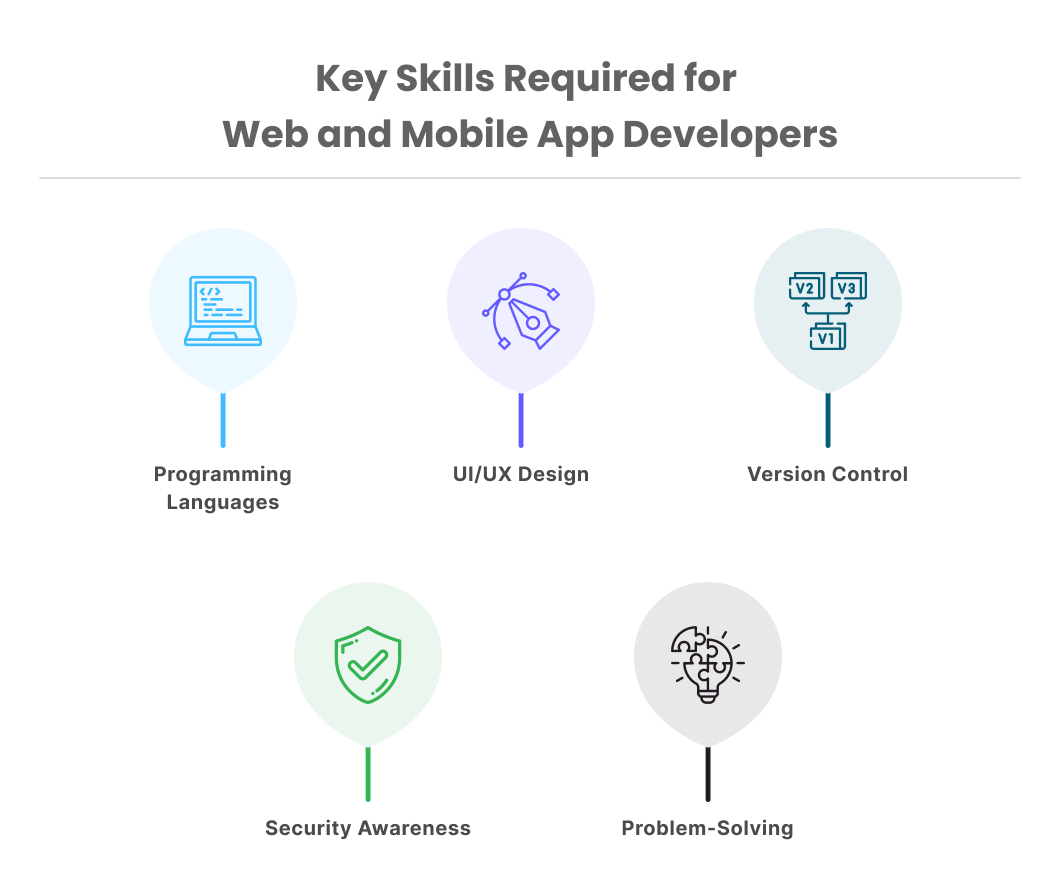
Programming Languages
Web developers use languages like HTML, CSS, and JavaScript for frontend, and languages like Python, PHP, or Ruby for backend development. Mobile developers use Swift or Objective-C for iOS apps and Java or Kotlin for Android apps. Cross-platform developers use languages like Dart (for Flutter) or JavaScript (for React Native).
UI/UX Design
Both web and mobile developers must focus on user interface (UI) and user experience (UX) to ensure their products are easy to use and visually appealing. Good UI design makes websites and apps intuitive, while UX design improves the overall experience by making interactions smooth and logical.
Version Control
Developers use tools like Git to track changes to the code and collaborate with other team members. GitHub or GitLab are commonly used platforms for storing code and sharing it with colleagues.
Security Awareness
Developers need to be aware of security practices to protect user data and prevent unauthorized access. For web development, this includes techniques like SSL encryption and secure authentication. For mobile apps, it means protecting data on users' devices and following platform security guidelines.
Problem-Solving
Developers constantly face issues that need quick thinking and problem-solving skills. Whether it’s debugging an error, optimizing performance, or troubleshooting compatibility issues, developers need to be able to find solutions quickly and effectively.
Differences Between Web and Mobile App Developers
Platform Focus Web developers focus on browsers and the internet, while mobile developers focus on creating apps for specific devices (iOS or Android).
Technologies The tools and languages used for web development are often different from those used for mobile app development. For example, web developers use HTML, CSS, and JavaScript, while mobile developers use Swift or Kotlin.
User Experience Mobile apps need to be optimized for smaller screens, different device features, and varying hardware. Web applications, however, need to be designed to work across different browsers and device types.
Challenges Faced by Web and Mobile App Developers
Web Developers face challenges like ensuring compatibility across different browsers (e.g., Chrome, Firefox, Safari) and optimizing websites for performance. They must also make sure websites are responsive, meaning they look and work well on various screen sizes.
Mobile App Developers face challenges such as dealing with multiple device models and OS versions. They also need to navigate platform-specific rules and approval processes (e.g., App Store vs. Google Play). Testing on different devices and handling updates are other common challenges.
The Future of Web and Mobile App Development
The future of both web and mobile development will be shaped by emerging technologies such as Progressive Web Apps (PWAs), Augmented Reality (AR), and the 5G network. PWAs offer a better user experience and are faster, while 5G will improve app performance, especially for mobile. Artificial Intelligence (AI) and Machine Learning (ML) are becoming more integrated into both web and mobile apps, offering features like personalization, voice recognition, and smarter search capabilities.
Hire Web and Mobile App Developer From Empiric Infotech LLP
At Empiric Infotech LLP, we provide expert web and mobile app development services tailored to meet your business goals. Whether you're looking to hire a Flutter developer for cross-platform mobile apps, need a FlutterFlow developer for faster, no-code app development, or want to hire a web developer to build a responsive website, we've got you covered.
Our team of skilled developers specializes in creating high-quality, scalable solutions that drive business growth. With expertise in full-stack development, we offer end-to-end services—from backend systems to intuitive user interfaces. We work closely with you to understand your unique requirements and deliver solutions that enhance user experience, improve operational efficiency, and boost ROI.
Whether you're a startup or an established enterprise, our developers bring the technical expertise and innovative mindset to help your business succeed. Let's work together to achieve your business objectives and stay ahead in the competitive market.
Conclusion
Web and mobile app developers play vital roles in creating the tools and experiences that shape how we interact with technology. While web developers focus on building websites that work across browsers, mobile developers create apps tailored to specific devices and platforms. Both roles require a combination of technical skills, creativity, and problem-solving abilities. Understanding the different responsibilities of web and mobile developers can help you choose the path that best suits your interests and career goals.