



 Front-end
 Back-end
 Full Stack Developer
 Mobile
 Other
Other


 Company
 Contact Us
Web development has come a long way. Just like we have tools to build a house, we have tools to build websites too. Two such tools are Django and Flask, which simplify the development process.
These Python-based frameworks offer a range of features and capabilities that make the building process of web applications more efficient and effective. Let's explore how Django and Flask can be leveraged for web development.
What are web development frameworks?
Imagine you are going to build a house without a blueprint of the house. It would be chaotic and incredibly challenging. Right? In the same way, in web development, web frameworks are like blueprints for building websites.
They provide a structured way to develop web applications, making the process more manageable and efficient.
Each has its own strengths and weaknesses, and understanding these can help you choose the right one for your project.
Why use Django and Flask?
Django and Flask are the most popular web frameworks of Python among developers. They offer distinct advantages and are suitable for different types of projects, making them valuable tools for developers.
Django - The High-Level Framework
Overview of Django
Django is a high-level web framework designed to facilitate the rapid development of secure and maintainable websites. It follows the "batteries-included" philosophy, providing a wide range of built-in features.
Key features of Django
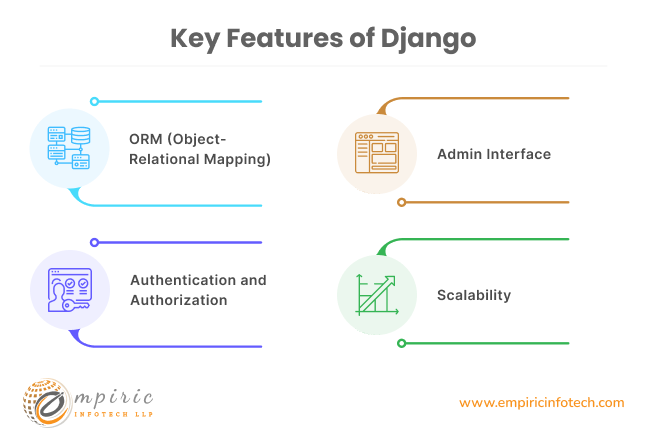
1. ORM (Object-Relational Mapping)
Django's ORM allows developers to interact with databases using Python code instead of SQL queries, making database operations more intuitive.
2. Admin Interface
Django comes with a powerful admin interface that enables easy management of application data without writing additional code.
3. Authentication and Authorization
Django includes robust authentication and authorization systems out-of-the-box, ensuring secure user management.
4. Scalability
Django is designed to handle high-traffic sites and scale efficiently as your application grows.
Want to learn more about Django?
Setting up a Django Project
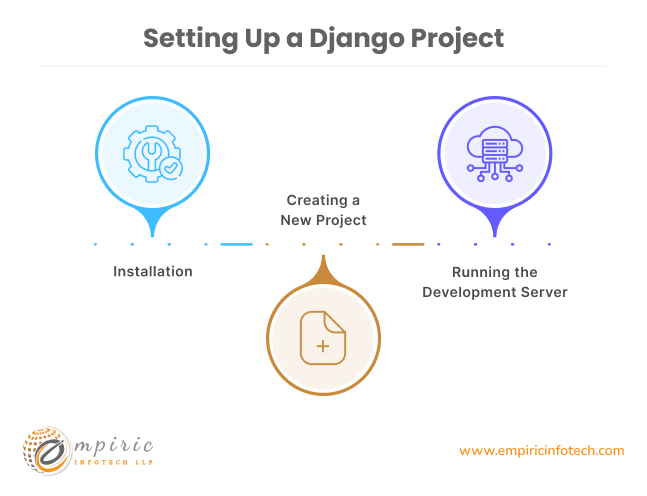
1. Installation
pip install django
2. Creating a New Project
django-admin startproject myproject
3. Running the development server
python manage.py runserver
Building a Simple Django Application
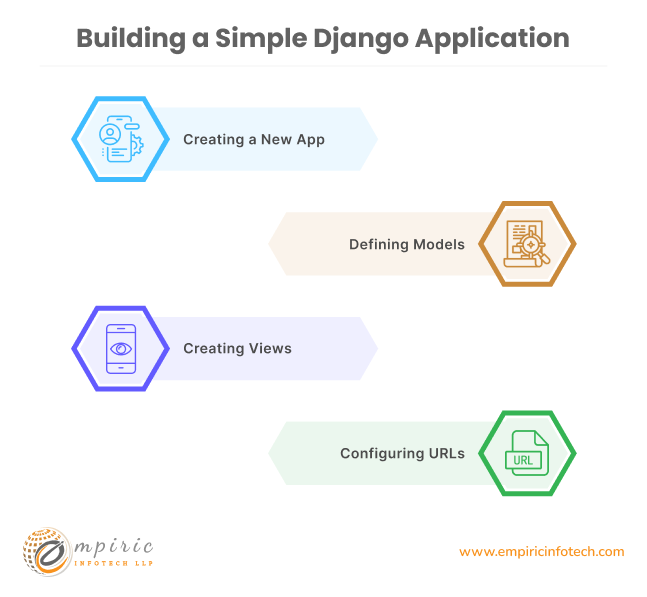
1. Creating a New App
python manage.py startapp myapp
2. Defining Models
In myapp/models.py:
from django.db import models
class Item(models.Model):
name = models.CharField(max_length=100)

description = models.TextField()

price = models.DecimalField(max_digits=10, decimal_places=2)
3. Creating Views
In myapp/views.py:
from django.shortcuts import render
from .models import Item
def item_list(request):
items = Item.objects.all()

return render(request, 'item_list.html', {'items': items})
4. Configuring URLs
In myapp/urls.py:
from django.urls import path
from .views import item_list
urlpatterns = [
path('', item_list, name='item_list'),
]
Advantages of using Django
-
Comprehensive documentation
-
Strong community support
-
High security standards
-
Rapid development capabilities
You can hire Django developers from Empiric infotech LLP to complete your project as our developers have expertise and experience to complete tasks efficiently.
Flask - The Micro Framework
Overview of Flask
Flask is a lightweight and flexible web framework that provides the essentials for building web applications without imposing too many constraints. It is often referred to as a "micro" framework due to its simplicity and minimalistic design.
Key Features of Flask
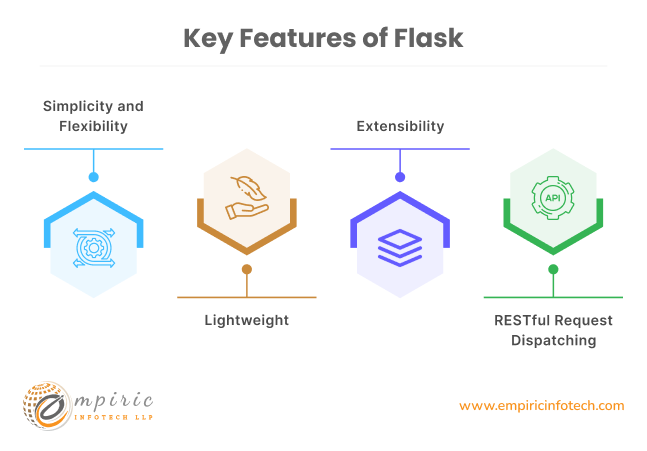
1. Simplicity and Flexibility
Flask's minimalistic approach allows developers to choose their tools and libraries, offering great flexibility.
2. Lightweight
Flask has a small footprint, making it ideal for small to medium-sized applications and projects where simplicity is key.
3. Extensibility
Flask can be easily extended with various plugins and libraries to add functionality as needed.
4. RESTful Request Dispatching
Flask supports RESTful request dispatching, making it suitable for developing APIs.
Setting Up a Flask Project
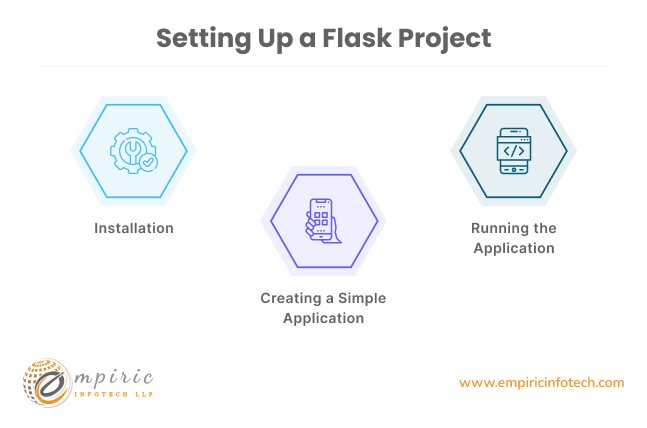
1. Installation
pip install flask
2. Creating a Simple Application
In app.py:
from flask import Flask, render_template
app = Flask(name)
@app.route('/')
def home():
return render_template('home.html')
if name == 'main':
app.run(debug=True)
3. Running the Application
python app.py
Building a Simple Flask Application
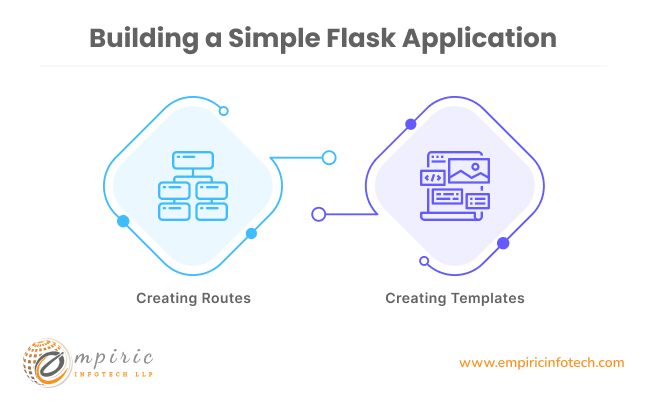
1. Creating Routes
In app.py:
@app.route('/items')
def item_list():
items = [

    {'name': 'Item 1', 'description': 'Description 1', 'price': 10.00},

    {'name': 'Item 2', 'description': 'Description 2', 'price': 20.00},

]

return render_template('item_list.html', items=items)
2. Creating Templates
In templates/item_list.html:
<title>Item List</title>
<h1>Items</h1>

<ul>

    {% for item in items %}

        <li>{{ item.name }} - {{ item.description }} - ${{ item.price }}</li>

    {% endfor %}

</ul>
Advantages of Using Flask
-
Lightweight and easy to learn
-
Highly flexible and customizable
-
Ideal for small to medium-sized applications
-
Excellent for building APIs
To take all the above advantages you can hire Flask developers from Empiric Infotech LLP. They will complete your project as they have expertise and experience to complete tasks efficiently.
Comparing Django and Flask
When to use Django
-
Large-scale applications with complex requirements
-
Projects that need built-in features like authentication and admin interfaces
-
Applications that require high security and scalability
Here are some companies that use Django:
-
Instagram: Instagram’s web platform is built using Django.
-
Spotify: Spotify uses Django for their backend services.
-
YouTube: YouTube uses Django for certain parts of their site.
When to Use Flask
-
Small to medium-sized projects
-
Applications where simplicity and flexibility are important
-
Projects that require a customized stack and minimal overhead
Here are some companies that use Flask:
-
Netflix - uses Flask for several backend utilities.
-
Reddit - employs Flask for its standalone services.
-
Zillow utilizes Flask for its API.
Conclusion
Both Django and Flask offer unique advantages for web development, catering to different needs and project scales. Django's comprehensive features and scalability make it ideal for large applications, while Flask's simplicity and flexibility are perfect for smaller projects. By understanding the strengths of each framework, you can choose the best tool for your web development needs.
FAQs
1. What is the main difference between Django and Flask?
Django is a high-level framework with many built-in features, while Flask is a lightweight framework that provides flexibility and simplicity.
2. Can I use Django and Flask together?
While it's uncommon to use both in the same project, you can use them in separate components of a larger system if needed.
3. Which framework is better for beginners?
Flask is generally considered easier for beginners due to its simplicity, but Django offers more built-in tools that can be beneficial for learning.
4. Is Flask suitable for large-scale applications?
While Flask can be used for large applications, it may require additional tools and libraries to handle complex requirements.
5. How do I choose between Django and Flask?
Consider the scale and complexity of your project, as well as your need for built-in features versus customization. Django is ideal for complex, large-scale applications, while Flask is great for smaller, flexible projects.