



 Front-end
 Back-end
 Full Stack Developer
 Mobile
 Other
Other


 Company
 Contact Us

In today's competitive digital market, a well-crafted website serves as a strategic asset, influencing customer perception and driving business growth. Yet, traditional web development can be resource-intensive and inflexible.
Python presents a compelling alternative. This versatile language equips businesses with the power to create custom, high-performance websites that precisely align with their unique needs and goals.
This blog provides a foundational understanding of key Python functionalities and resources. This will empower you to begin your web development journey with ease.
Although hiring a Python developer from a well-known development company to build your website will help you stay focused on your business, knowing the process will make sure the development effort is heading in the right direction.
Setting Up Your Python Web Development Environment
Before beginning your web development journey with Python, let's get your environment ready! Here's a step-by-step guide:
1. Install Python
Head to https://www.python.org/downloads/ and download the latest stable version appropriate for your operating system.
During installation, ensure you check the box to add Python to your PATH environment variable. This allows you to run Python commands from any terminal/command prompt.
2. Choose a Code Editor/IDE
Code Editor: Opt for a lightweight editor like Visual Studio Code (https://code.visualstudio.com/) for flexibility and customization.
IDE: Consider a full-fledged Integrated Development Environment (IDE) like PyCharm (https://www.jetbrains.com/pycharm/) for advanced features like code completion and debugging.
3. Install the Chosen Editor/IDE
Follow the download and installation instructions specific to your chosen editor/IDE.
4. Select a Python Web Framework
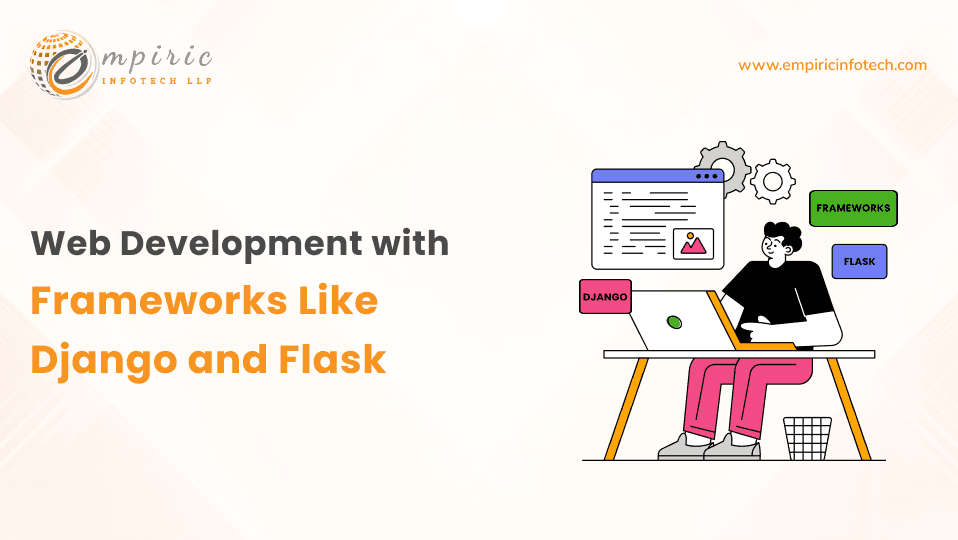
Web frameworks provide pre-built structures and tools for streamlining web development. Two popular options are:
Django: Ideal for complex, data-driven websites with features like user authentication, content management, and admin panels.
DRF: Best for building robust and well-structured RESTful APIs. Its pre-built components and tools significantly accelerate development.
Flask: More lightweight and flexible, suitable for smaller projects, APIs, and rapid prototyping.
5. Install the Framework
Open your terminal/command prompt and use pip to install your chosen framework:
pip install django for Django
 pip install Flask for Flask
Framework Differences and Use Cases
When selecting a web framework, consider its core functionalities and suitability for your project's specific needs. Here's a breakdown of Django, DRF, and Flask:
Django
Comprehensive: Offers a complete set of pre-built features (recipes) and structured workflows, resembling a well-equipped kitchen.
Ideal for: Complex, data-driven websites requiring standard functionalities like user authentication, content management, and admin panels.
Less Flexible: Enforces defined structures and processes, offering less customization compared to Flask.
Django REST Framework (DRF)
Powerful and Flexible: Allows you to quickly and easily develop APIs that expose your Django models and data in a RESTful (Representational State Transfer) way. It also enables other applications to interact with your data via JSON, XML, or other formats.
Ideal for If you need to build robust and well-structured RESTful APIs quickly, Django REST Framework's pre-built components and tools significantly accelerate development.
Low Performance in High Traffic: While DRF is efficient for many use cases, it's not specifically built for handling millions of requests per second.
Flask
Lightweight and adaptable: Provides core functionalities (basic ingredients) analogous to a pantry, allowing for flexible website structure creation.
Ideal for: smaller projects, rapid prototyping, or websites requiring unique features and custom workflows.
Requires More Development Effort: Lacks pre-built features, demanding manual implementation of functionalities found in Django.
Master the Basics of Frontend Development
The user interface (UI) of your website, often referred to as the frontend, plays a crucial role in user experience. While Python drives the backend functionalities, three core languages orchestrate the visual and interactive elements of the UI:
1. HTML (Hypertext Markup Language)
Defines the structure and content organization of your website, acting as the foundation upon which other elements are built.
Analogous to a blueprint, HTML specifies the layout of various sections and elements like headings, paragraphs, and images.
Learning Resources:
https://www.w3schools.com/html/
https://developer.mozilla.org/en-US/docs/Web/HTML
2. CSS (Cascading Style Sheets)
Controls the visual presentation of your website, including colors, fonts, layouts, and responsiveness.
Think of it as the styling and formatting applied to the blueprint, defining how each element appears on the screen.
Learning Resources:
https://www.w3schools.com/css/
https://developer.mozilla.org/en-US/docs/Web/CSS
3. JavaScript
Enables interactivity and dynamic behavior within your website, allowing for user actions, animations, and real-time updates.
Imagine it as the electrical wiring and smart home features that add functionality and responsiveness to your house.
Learning Resources:
https://developer.mozilla.org/en-US/docs/Web/JavaScript
Interaction with Python
While Python handles the backend logic and data processing, these frontend languages work in collaboration:
Python frameworks like Flask or Django typically generate the basic HTML structure.
Frontend developers then style and add interactivity using CSS and JavaScript, independent of Python's code.
The browser renders the combined HTML, CSS, and JavaScript, presenting the final website to the user.
Backend Development with Python
Django stands as a powerful Python framework, streamlining web application development with its comprehensive features. Let's dive into its core functionalities:
1. Creating Routes and Handling User Requests
Routes: Define pathways within your application, connecting user requests (e.g., visiting a specific page) to corresponding Python code functions.
Views: Functions responsible for handling user requests and generating responses.
Example:
from django.urls import path

from. import views  # Import views from the current app

urlpatterns = [

path('', views.home, name='home'),  # Route for the homepage

path('about/', views.about, name='about'),  # Route for the about page

]
2. Data Processing and Database Interactions
Models: Represent the structure of your data, similar to blueprints for database tables.
Object-Relational Mapper (ORM): Connects Python code with the database, enabling seamless data manipulation without intricate SQL queries.
Example:
from django.db import models
class Article(models.Model):
title = models.CharField(max_length=200)

content = models.TextField()

pub_date = models.DateTimeField('date published')
3. Rendering Dynamic Content with Templates
Templates: Combine HTML with dynamic elements using a templating language, allowing data integration into webpages.
Template tags: Instructions within templates for displaying data and performing actions.
Example:
 <h1>{{ article.title }}</h1>

<p>{{ article.content }}</p>

<p>Published on: {{ article.pub_date }}</p>
Deployment and Hosting Your Python Website
Once you've crafted your stunning website with Python, it's time to share it with the world! Here's a breakdown of popular deployment options:
1. Shared Hosting
Affordability: Most budget-friendly option, sharing server resources with other websites.
Ease of Use: Often managed by providers, simplifying setup and maintenance.
Limitations: Lower performance, restricted customization, and potential security risks due to shared environment.
2. Cloud Platforms
Scalability: Adapts effortlessly to traffic fluctuations, providing on-demand resources.
Flexibility: Offers diverse configurations and services (databases, storage) on a pay-as-you-go model.
Examples: Heroku, AWS, Google Cloud Platform, Azure.
Technical Expertise: Requires understanding of platform-specific tools and configurations.
3. Virtual Private Server (VPS)
Dedicated Resources: Allocates a portion of a physical server dedicated to your website, offering more control and flexibility than shared hosting.
Cost: More expensive than shared hosting, but often cheaper than dedicated servers.
Technical Expertise: Requires server administration skills or managed VPS options.
Benefits of Using Python for Web Development
Python has emerged as a powerful and popular choice for web development due to several key advantages:
Exceptional Readability
Python's syntax is known for its clarity and resemblance to natural language. This minimizes cognitive load, reduces errors, and facilitates collaboration, making code easier to understand, maintain, and modify.
Extensive Ecosystem of Libraries
Python boasts a vast collection of open-source libraries, frameworks, and tools that address diverse web development needs. From data analysis (NumPy, Pandas) to machine learning (TensorFlow, scikit-learn) and web frameworks (Django, Flask), you'll find readily available solutions for virtually any functionality.
Vibrant and Supportive Community
The Python community is renowned for its welcoming and helpful nature. Numerous online forums, tutorials, and passionate developers are readily available to help, answer questions, and troubleshoot challenges. This collaborative environment fosters continuous learning and problem-solving.
Cross-Platform Compatibility
Python code is readily portable across different operating systems (Windows, macOS, Linux) without major modifications, reducing development effort and simplifying deployment.
Rapid Prototyping
Python's concise syntax and readily available libraries make it ideal for quickly prototyping website ideas and validating concepts before investing significant time and resources into full-fledged development.
High Demand and Job Opportunities
Python's popularity translates to high demand for skilled developers across various industries, including web development. This opens doors to exciting career opportunities and potentially higher earning potential.
Continuous Development and Improvement
Python boasts a dedicated development community constantly working on improvements, new features, and library updates. This ensures the language remains relevant and keeps pace with evolving technologies.
Integration with Other Languages
Python can seamlessly integrate with other languages like C++ or Java, allowing you to leverage specific strengths from each language within your project when needed.
Cost-Effectiveness
As an open-source language, Python is free to use, along with most of its libraries and frameworks. This reduces development costs, making it a particularly attractive option for startups and individual developers.
Different Types of Websites You Can Build with Python
Python's adaptability empowers the creation of a broad spectrum of web applications, catering to diverse functionalities and user needs. Here's a breakdown by category:
Content-Management Systems (CMS)
Blogs and Portfolios: Develop dynamic, content-rich blogs or online portfolios showcasing work with frameworks like Django or Flask.
News and Media Websites: Publish real-time news updates, articles, and interactive elements with data-driven features.
E-learning Platforms: Create courses, assessments, and interactive learning experiences with user management and content delivery functionalities.
Community Forums and Discussion Boards: Foster online communities with real-time communication APIs and user authentication systems.
Data-Driven Applications
Interactive Dashboards and Visualizations: Transform data into insightful dashboards and visualizations using Python's data analysis libraries (NumPy, Pandas).
Business Intelligence (BI) Tools: Build comprehensive BI tools for data exploration, analysis, and reporting, enabling data-driven decision making.
Financial Applications: Develop trading platforms, investment analysis tools, and financial dashboards leveraging Python's quantitative strengths.
Scientific Computing Websites: Analyze scientific data, visualize results, and build interactive models using libraries like SciPy and Matplotlib.
E-commerce and Marketplace Platforms
Online Stores: Build robust and scalable e-commerce websites with secure payment processing, inventory management, and user-friendly interfaces.
Auction Platforms: Design online auctions with bidding functionalities, user profiles, and payment integrations.
Marketplace Websites: Facilitate peer-to-peer transactions for various goods and services, integrating secure payment gateways and user management systems.
Social Networking and Communication Platforms
Social Media Platforms: Connect users with real-time communication APIs, user profiles, content sharing features, and community management tools.
Messaging Applications: Build chat apps, instant messaging platforms, and video conferencing solutions using Python's networking libraries.
Collaborative Tools: Develop project management platforms, task management systems, and other collaborative tools for teams and organizations.
Artificial Intelligence (AI)-Powered Websites
Intelligent Chatbots: Integrate machine learning models to create chatbots for customer service, product recommendations, or personalized support.
Image Recognition and Processing: Implement features like facial recognition, object detection, or image analysis using computer vision libraries like OpenCV.
Predictive Analytics and Recommendations: Leverage machine learning for personalized recommendations, content suggestions, and targeted advertising.
Empiric Infotech - Your Partner in Making a Website with Python
As you've explored, Python empowers the construction of diverse and dynamic websites, from simple blogs to complex, data-driven applications. By harnessing its versatility, rich ecosystem of libraries, and supportive community, you're equipped to turn your digital solution dream into reality.
However, you might want to focus on your business rather than creating the website yourself. That’s where Empiric Infotech comes in!
We are your trusted Python development company in this exciting endeavor. Our team of Python experts boasts extensive experience in crafting high-performance, scalable, and user-centric websites.
Contact us today for a free consultation!