



 Front-end
 Back-end
 Full Stack Developer
 Mobile
 Other
Other


 Company
 Contact Us
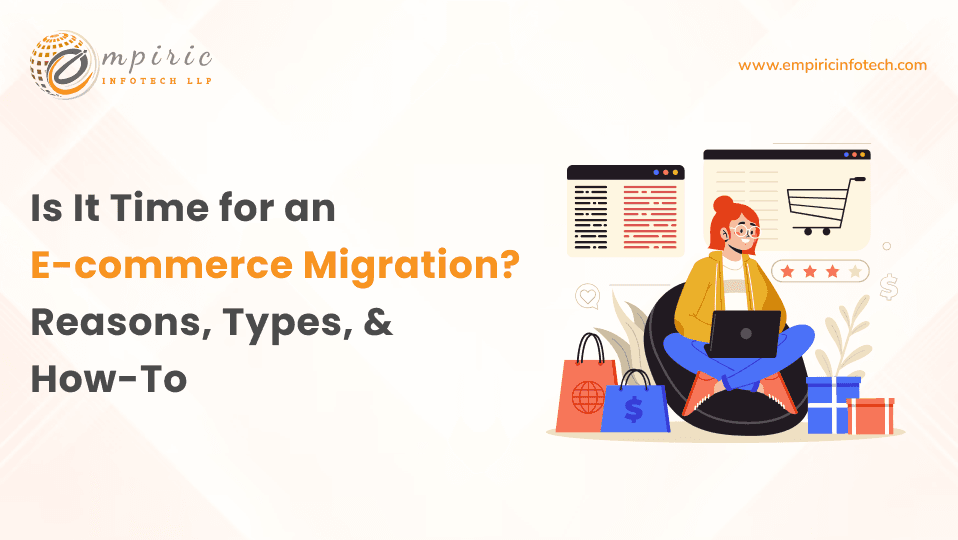
Is your online store held back by sluggish performance, poor user experience, or security concerns? Outdated technology, limited features, and increasing costs can cripple your ability to compete and grow. The solution to all these problems is ecommerce platform migration.
E-commerce migration involves relocating your online storefront to a more capable platform.
Our comprehensive blog will help you understand the when and why of platform migrations, offering expert insights for every step of the process.
What is E-commerce Migration
E-commerce migration means moving your online store from its current platform to a new one. This major shift impacts all facets of your online business, from backend management to the customer-facing front end. Let's break down why this change happens and how it matters for your online store.
Reasons for E-commerce Platform Migration
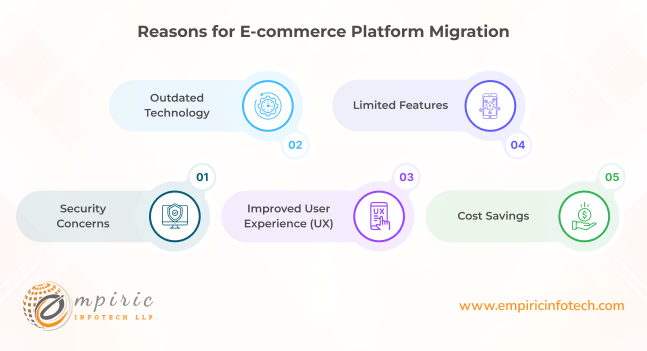
Outdated Technology
Your existing platform might no longer meet your store's growing needs. Slow loading times, performance bottlenecks during peak traffic, and an inability to handle increased product catalogs or transactions all signal the need for a migration. Outdated platforms might become incompatible with important third-party tools you wish to integrate with your store.
Limited Features
Your current platform might be inflexible for customizations vital to your evolving business strategy. This could involve challenges like implementing loyalty programs, advanced search functions, personalized product recommendations, or the inability to support multiple languages or currencies if you want to expand internationally.
Security Concerns
Older platforms, especially those that are no longer actively supported, can become vulnerable to hacking and data breaches. eCommerce migrations usually prioritize moving to a platform with robust security infrastructure, built-in fraud prevention tools, and compliance with regulatory standards like PCI-DSS (crucial for handling payment card information).
Improved User Experience (UX)
Today's shoppers expect fast, intuitive, and visually appealing online stores. They might become frustrated and take their business elsewhere if your current platform has confusing navigation, poor mobile optimization, or a lengthy and complex checkout process. This makes migration an opportunity to prioritize enhancing the overall user experience across devices.
Cost Savings
While re-platforming is an investment, consider the long-term savings. Newer platforms sometimes offer more favorable payment processing rates or reduced licensing fees. Optimizations that come with a modern platform might mean a reduced need for certain add-ons or the use of costly custom workarounds, driving down costs.
Different Types of E-commerce Migration
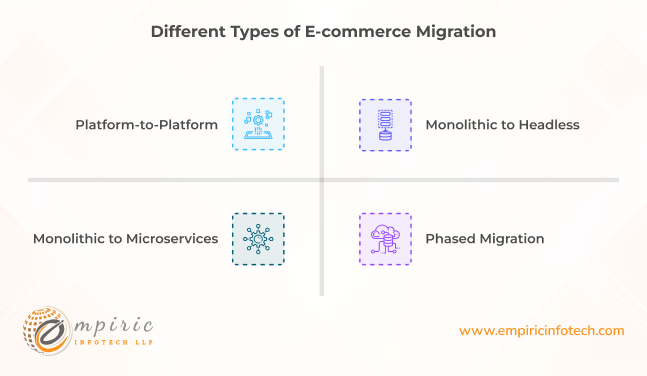
Platform-to-Platform
This is the most common type of platform migration, involving a wholesale shift of your online store from one dedicated e-commerce platform to another. It encompasses scenarios like:
-
Moving from Shopify to BigCommerce to take advantage of different pricing structures or feature sets aligned with your current business needs.
-
Upgrading from Magento 1 to Magento 2 to access essential security patches and leverage a vastly improved backend interface for store management.
-
Transitioning from a self-hosted solution, where you are fully responsible for server setup and maintenance, to a SaaS (Software-as-a-Service) platform for simplified hosting and streamlined updates.
Monolithic to Headless
In a monolithic architecture, your storefront (what customers see) and your backend management system (product listings, order processing, etc.) are inseparable. Headless commerce decouples these, allowing for far greater flexibility on the front end.
Your 'head' (presentation layer) could be designed using modern web technologies and connect to the backend via APIs. This empowers rapid custom frontend development without being burdened by legacy backend limitations and helps create truly unique shopping experiences.
Monolithic to Microservices
Monolithic platforms bundle all operations into a single unit. A microservices-based architecture involves breaking down those functions into individual, independently managed services that communicate via APIs.
For large enterprises, this offers scalability advantages when specific elements (search, inventory, etc.) need to handle heavy loads and rapid innovation. It allows changes to be deployed swiftly in a compartmentalized way, improving developer speed.
Phased Migration
This approach is about managing risk and minimizing disruptions. Instead of a sudden cutover to the new platform, you migrate specific sections or modules of your store piece by piece over a set timeline.
This is suited to very complex operations where any potential downtime has a significant impact, allowing you to manage changes strategically in a controlled way. For example, you may first migrate product data, then the checkout process, and finally implement new frontend design elements in separate phases.
Why You Should Go For E-commerce Migration
While a significant undertaking, e-commerce migration often brings benefits that far outweigh the initial time and resource investment. Here's why it's worth considering:
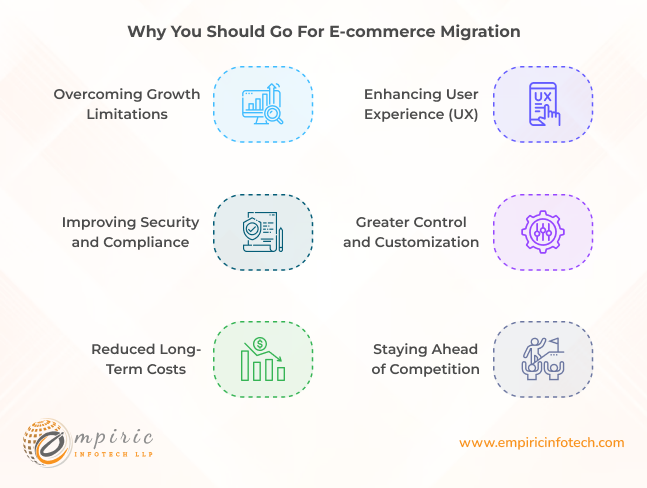
Overcoming Growth Limitations
When growth stalls due to technological barriers, the question shouldn't be if you migrate, but rather when. Imagine frustrating load times during peak shopping seasons, an inventory system unable to handle your product expansion or limits on the number of orders you can comfortably process.
A well-chosen new platform removes these obstacles, paving the way for sustained business growth and greater revenue potential.
Enhancing User Experience (UX)
Modern shoppers have high expectations. They demand quick load times, intuitive navigation, and a seamless checkout process regardless of device. Your store's success relies on exceeding these expectations.
If your current platform leads to a lackluster front end or hinders your ability to create streamlined mobile shopping experiences, a well-executed migration offers an avenue to transform these weaknesses into strengths.
Do users leave your website or app without interacting with it? Hire our UI/UX Designers to Take Your Design to the Next Level.
Improving Security and Compliance
Data protection is paramount, and it's challenging to stay on top of security concerns without ongoing support from your platform provider. If you work with a legacy system nearing its end-of-life or are burdened by costly custom patching, platform migration provides a path to safer ground.
Newer platforms prioritize up-to-date security practices and tools, simplifying the often complex world of compliance (like PCI-DSS requirements), protecting customer data, and fostering trust.
Greater Control and Customization
Picture customizing every aspect of your store to the unique needs of your customers. Migrating often removes the roadblocks you're used to, granting more freedom than ever before. APIs offer a powerful way to seamlessly integrate with tools and services that boost your operations, whether it involves shipping platforms, accounting software, or marketing automation.
This freedom makes creating highly tailored, efficient, and scalable shopping experiences easier than ever.
Reduced Long-Term Costs
An obvious initial investment comes with any e-commerce migration, but consider the hidden costs of staying put. Older platforms may lack performance optimizations, leading to higher hosting expenses.
They often rely on inefficient workflows, translating into either a need for extensive development work or pricey plugin marketplaces to bridge feature gaps. A modern platform may have a higher monthly cost but could yield a lower total cost of ownership through efficiencies gained.
Staying Ahead of Competition
Consumers have a wealth of choices at their fingertips. Those unwilling to upgrade create openings for competitors who do. Staying competitive requires keeping pace with evolving web technologies.
This might include features like AR previews that give customers a better product understanding, powerful data-driven personalization tactics, or tight social media integration for increased discoverability. Migration opens the door to continuous innovation.
Steps for a Successful E-commerce Migration
E-commerce migration projects may differ in specific details but broadly adhere to the following phases:
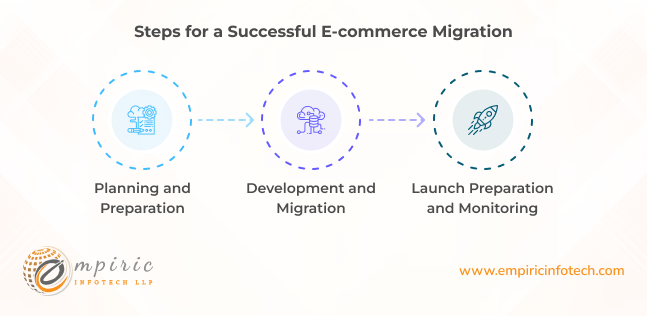
Planning and Preparation
-
Set Clear Goals: Define what you want to achieve. Are you focused on scalability, security, or improved cost efficiencies? Outlining clear goals aligns all stakeholders and guides decision-making.
-
Data Audit: Take a deep dive into your existing store. Analyze product catalogs, customer data, order history, and identify any dependencies related to integrations with third-party tools.
-
Platform Selection: Carefully research platforms in accordance with your identified needs, budget, and scalability goals. Request demonstrations, try out trials, and pay close attention to features and ease of integration.
Development and Migration
-
Design and UX Focus: Develop wireframes and create the design for your new storefront. Modern e-commerce prioritizes exceptional user experience. This may also involve a phased approach, where front-end changes come later if a fast migration time is required initially.
-
Data Migration: Plan a meticulous data migration strategy. This is a mission-critical element with many considerations in terms of both methods and accuracy.
-
Testing: A robust testing plan covering functionality, performance, security, and various device responsiveness is non-negotiable. Ideally, testing involves different use-case scenarios and real-world simulations.
Launch Preparation and Monitoring
-
SEO Strategy: Prevent losing search engine rankings. Establish 301 redirects, update sitemaps, and address metadata to ensure search engines index your new site without hiccups.
-
Launch Checklist: Create a pre-launch and post-launch checklist. This will ensure all stakeholders have their tasks planned and any necessary communication templates are set for both staff preparedness and customer outreach.
-
Monitoring: Watch closely after launch. Look at crucial metrics, analyze logs, and be ready to address any unforeseen issues, bugs, or unexpected customer experience problems.
Additional Considerations
-
Choosing a Migration Team: Assess whether you have the skills in-house or if employing an external agency makes sense. Experience in your chosen platform, knowledge of SEO best practices, and strong project management skills are essential.
-
Timeline and Budget: While speed is a factor, rushing often leads to mistakes. Allocate a realistic timeline and budget – this minimizes mid-project surprises.
-
Customer Communication: Transparent communication builds trust. Inform customers about the migration beforehand, especially of any temporary downtime that might be part of the launch.
Migrate Your E-commerce Platform with Empiric Infotech
Understanding the transformative potential of e-commerce migration is only the first step. Bringing your vision to life demands careful execution and seamless collaboration. Empiric Infotech, with its e-commerce migration services, stands ready to be your trusted partner throughout this process.
We offer a seasoned team of ecommerce experts, specializing in all the major platforms. Don't let a legacy system hold you back. Capitalize your e-commerce potential with a tailored migration plan from Empiric Infotech.